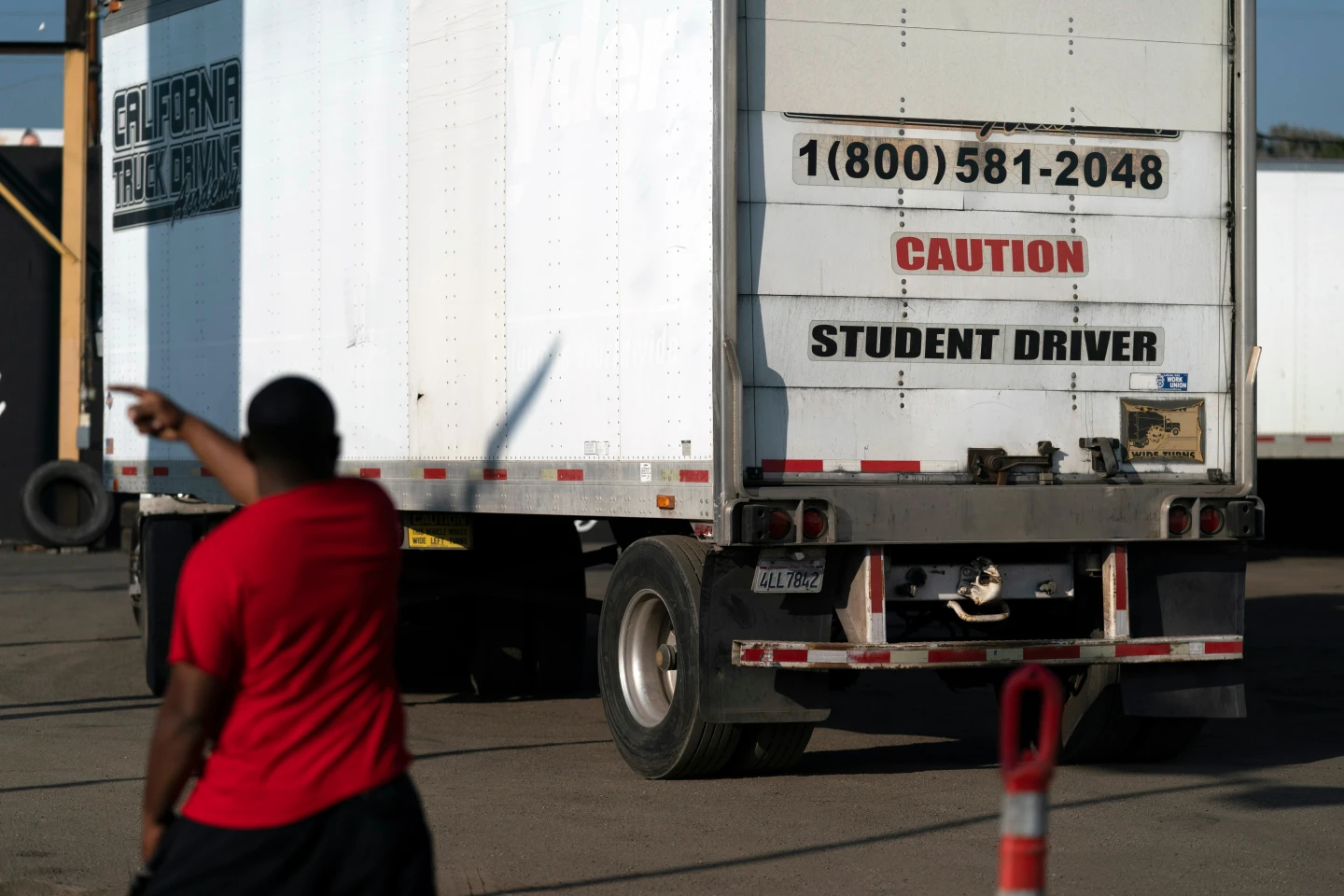
The Trump administration’s recent move to enforce standards for commercial truck drivers has resulted in nearly half of the driving schools being flagged as noncompliant. However, industry experts suggest this action is unlikely to disrupt the trucking sector significantly. The more reputable schools were not affected by this list, and it appears that many of the flagged institutions were already inactive. Observations indicate that these new enforcement efforts, which include scrutinizing immigrant drivers particularly, are expected to unfold gradually as licensing comes up for renewal and new drivers emerge from training programs.
The ongoing economic downturn has also contributed to a surplus of drivers, with a reported 10% decline in shipments since 2022. Nevertheless, trucking firms are still facing challenges in securing qualified drivers with clean records.
Controversially, the crackdown on immigrant drivers has intensified following a tragic incident in Florida, where an unauthorized driver caused a deadly crash. In response, Transportation Secretary Sean Duffy underscored the importance of ensuring that truck drivers meet specified English proficiency standards, especially within the immigrant workforce, which constitutes roughly 20% of the total truck driving population. Following the crash, tighter restrictions targeting noncitizens seeking to obtain commercial driving licenses were proposed.
The Impact of Stricter Regulations
As part of their enforcement strategy, the administration has threatened to withhold funding from states like California, Pennsylvania, and Minnesota due to existing irregularities in their licensing processes, particularly concerning immigrant drivers’ work permits. This escalation in scrutiny has caused California to revoke approximately 17,000 licenses.
Truck company owner Dave Atwal shared concerns from his drivers who fear facing harassment on the roads. Many have either quit or opted not to renew their licenses despite their proven safe driving records. Dave Laut echoed this sentiment, revealing difficulties in hiring a sufficient number of drivers, as the majority of those leaving are immigrants who feel marginalized and targeted.
While the logging industry anticipates that decertifying unqualified driving programs may bolster safety in the long run, it also raises concerns about reduced driver availability and longer wait times for those seeking to enter the profession. Many established schools have indicated that they cannot comply with regulatory changes, leading to potential staffing shortages.
Some rookie driving schools report a surge in enrollment among immigrants willing to pay for training, signaling an ongoing interest despite language barriers that complicate learning. With the possibility of rising standards, the debate over the quality and assessment of driver training programs is likely to continue, underscoring the challenge of balancing safety with workforce needs.