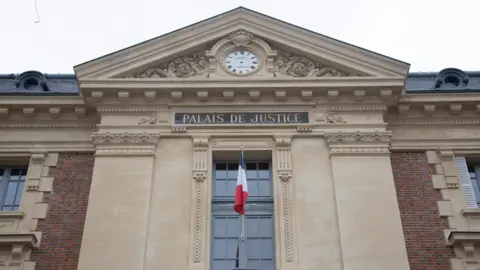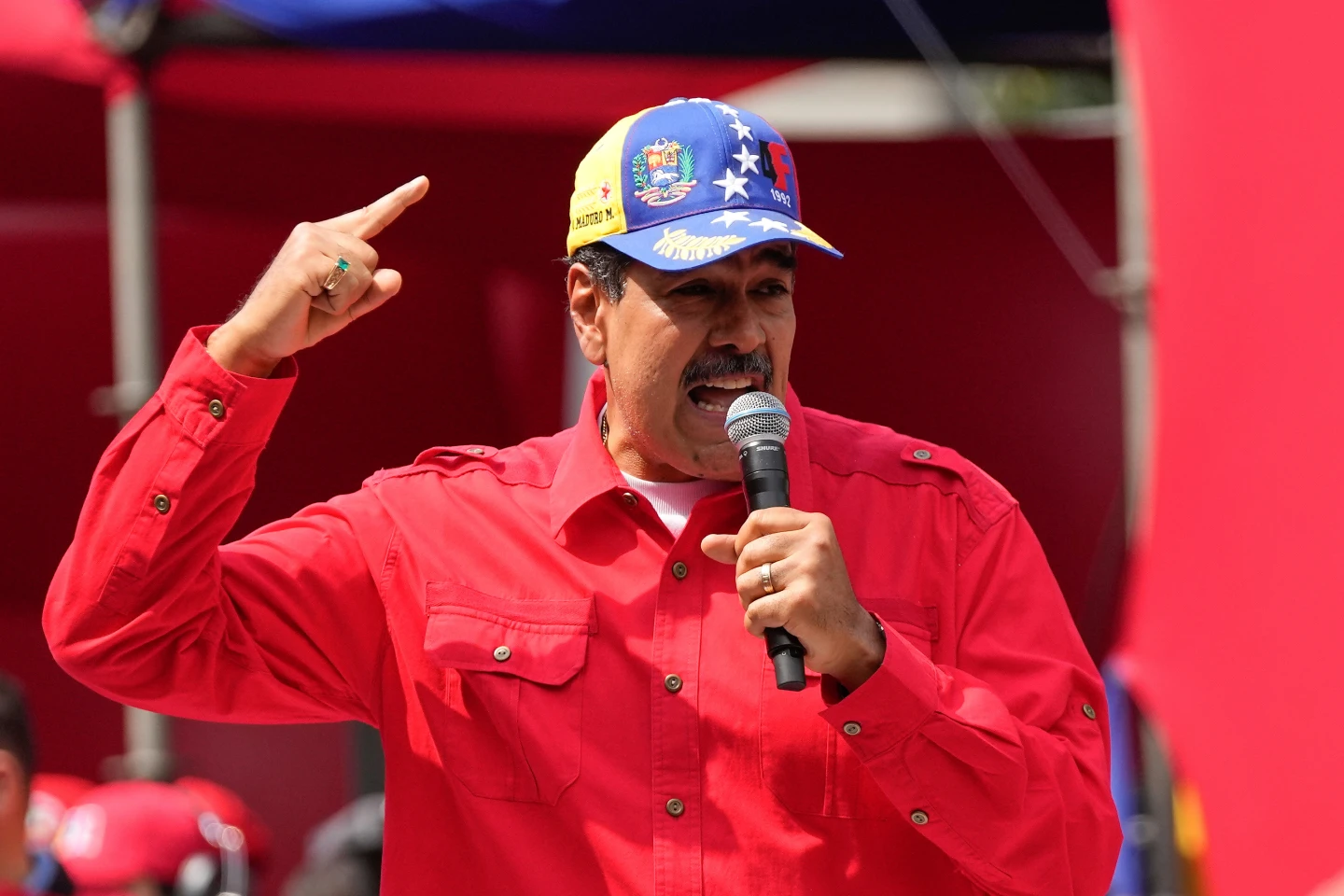
NEW YORK (AP) — Former Venezuelan President Nicolás Maduro returns to a New York courtroom Thursday as he seeks to have his drug trafficking indictment thrown out due to a geopolitical dispute over legal fees.
Maduro’s lawyer contends that the U.S. is violating the deposed leader’s constitutional rights by blocking Venezuelan government funds from being used to pay his legal costs.
This is the first time that Maduro and his wife, Cilia Flores, will be in court since a January arraignment at which he protested their capture by U.S. military forces, declaring: “I am not guilty. I am a decent man, the constitutional president of my country.” Flores has also pleaded not guilty.
Both continue to be held in a detention center in Brooklyn and have not requested bail. Judge Alvin Hellerstein has not yet set a trial date, although that may happen at the hearing.
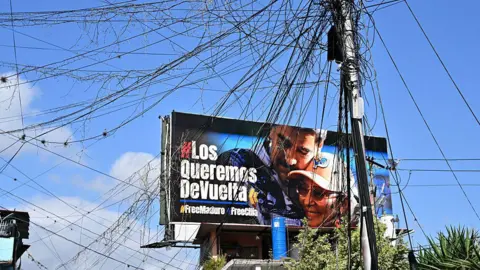
Maduro, 63, and Flores, 69, maintain some support in Venezuela, as evidenced by murals and billboards across the capital, Caracas, demanding their return. However, while Maduro's ruling party remains in power, he has gradually been sidelined by Delcy Rodríguez, Venezuela's acting president.
Rodríguez has reorganized the government, replaced senior officials, and eliminated many tenets of the self-proclaimed socialist movement that has reigned in Venezuela for over two decades.
Recent moves in U.S. foreign policy have included the easing of sanctions on Venezuela’s pivotal oil industry, indicating a possible thaw in relations as the U.S. has sent a diplomatic envoy to Caracas. Yet, even these changes may not be enough to alleviate Maduro and Flores from the financial burden of their legal fees.
A court filing reveals Maduro’s attorney, Barry Pollack, argued that the U.S. Treasury Department’s Office of Foreign Assets Control had initially allowed the use of Venezuelan funds for legal fees but retracted that permission within hours of approval.
Maduro’s indictment alleges extensive involvement with drug cartels, including the shipment of cocaine into the U.S. If found guilty, they face life imprisonment. Amidst all of this, everyday life for many Venezuelans remains precarious, with inflation rates soaring and public salaries barely sustainable.