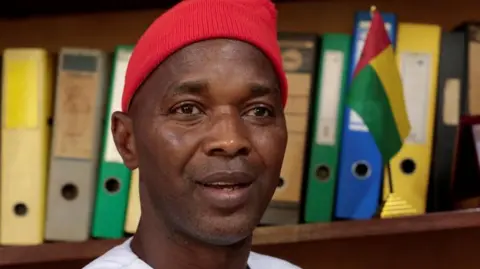
Nigeria has granted asylum to Guinea-Bissau presidential candidate Fernando Dias da Costa just days after a coup prevented the results of the recent election from being announced.
The 47-year-old, who ran as a candidate for the Party for Social Renewal, was under special protection at the Nigerian embassy following threats made against him, Nigeria's foreign minister stated.
Dias was the main challenger to Umaro Sissoco Embaló, who was seeking a second term as president and has left the country following the military takeover.
A delegation from the West African bloc Ecowas has been in the country, urging the military to step aside and release the results of the vote.
Both Embaló and Dias claimed victory in the presidential poll held on 23 November. The PAIGC party, the liberation movement that ended Portuguese colonial rule, had been barred from fielding a candidate.
The coup occurred three days post-election, with the military claiming to act against a plot to destabilize the country. The junta has since suspended the electoral process, blocked results’ release, and imposed strict restrictions including a ban on all demonstrations.
Tensions remain high in the capital, Bissau, where the PAIGC has reported illegal invasions of its headquarters by armed militia groups following the coup.
Iranian Nigeria's Foreign Minister Yusuf Tuggar noted that President Bola Tinubu offered protection to Dias in the Nigerian embassy. The decision emphasizes Nigeria's commitment to safeguarding the democratic aspirations of Guinea-Bissau.
Discussions between Ecowas representatives and the junta were reportedly intense, with significant concerns expressed by both sides. A new transitional leader has been sworn in by the junta, and Ecowas has suspended Guinea-Bissau from all decision-making bodies until order is restored.
The true motives behind the coup are unclear, amidst allegations from various sources that it may have been staged to thwart electoral results unfavorable to Embaló. Guinea-Bissau has experienced numerous coups in its history, reflecting its ongoing challenges in political stability.