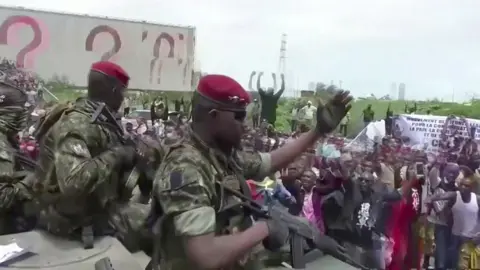
From the moment he seized power in September 2021, Guinea's Mamadi Doumbouya struck an imposing figure. Just 36 years old at the time, the broad-shouldered colonel, clad in military fatigues, mirrored sunglasses, and a red beret, made an immediate impression as he announced the coup against President Alpha Condé. Presenting himself as a defender of democracy, he claimed the previous government had violated citizens' rights.
After serving as interim president for over four years, Doumbouya, now 41, is set to be sworn in as the official president following a controversial election in December where he won with 87% of the votes. The election process has drawn criticism, with opposition figures like ex-Prime Minister Cellou Dalein Diallo labeling it a facade.
Despite some level of popularity, significant questions loom regarding Doumbouya's democratic legitimacy. Critics point to the banning of political parties and opposition suppression, alongside reported disappearances of activists, raising serious concerns about his commitment to democratic principles.
In recent appearances, Doumbouya has crafted a more civilian-friendly image, often appearing in tracksuits or traditional attire, seemingly distancing himself from his military roots. Analysts suggest this transformation aims to project him as a leader aligned with the populace. However, skepticism remains regarding the sincerity of this transition as concerns about human rights violations persist.
Notably, Doumbouya's administration has adopted a stance of 'resource nationalism', aiming to retain ownership of Guinea's wealth, particularly its vast mineral resources. This narrative resonates with citizens who hope for a future where they benefit from the nation's riches rather than foreign corporations. As the government rolls out development initiatives related to the Simandou iron-ore project, analysts observe that success in this domain could significantly define Doumbouya's legacy.
As Doumbouya prepares for his inauguration, he is expected to call for unity and patriotism, positioning himself as a champion of Guinean autonomy amid a landscape filled with skepticism about his rule. The unfolding political dynamics will be critical in shaping Guinea's future as it navigates the complexities of leadership transitions from military to civilian governance.