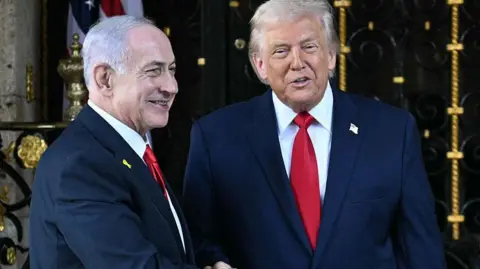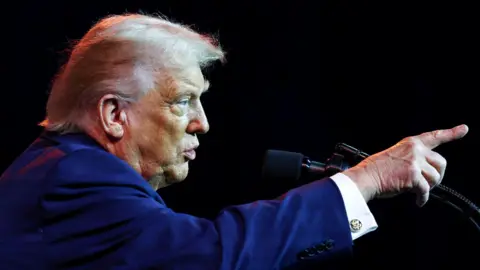
In a statement that has drawn significant attention, former US President Donald Trump has warned that he could authorize more military action against Nigeria if the ongoing violence against Christians does not cease. Trump made these remarks during an interview with the New York Times, where he described his recent airstrikes targeting Islamist militants in Nigeria's Sokoto state as potentially the beginning of a greater response.
I'd love to make it a one-time strike. But if they continue to kill Christians, it will be a many-time strike, Trump declared, highlighting what he perceives as a growing threat to Nigeria's Christian population.
However, the Nigerian government has pushed back against Trump's assertions, claiming that the violence affects all citizens, regardless of their faith. In a recent statement, they noted that Muslims, Christians, and individuals of no faith have all been victims of the ongoing violence perpetrated by jihadist groups.
Despite Trump's comments, various observers point out that the majority of the victims of the Islamist insurgency in Nigeria are, in fact, Muslims. Yet, within certain political discussions in the United States, narratives regarding a systematic genocide against Nigerian Christians have gained traction.
The complex situation in Nigeria is further exacerbated by a history of violence from groups such as Boko Haram and Islamic State affiliates, who have terrorized regions of the northeast for years. The country also faces various security challenges, including kidnapping and ethnic conflicts.
The airstrikes ordered by Trump on Christmas Day targeted bases of the jihadist group Lakurawa, located in predominantly Muslim areas near Nigeria's borders. While the Nigerian Foreign Minister stated that the attacks were a joint operation, reflecting the country’s collaborative effort in fighting the insurgency, Trump framed the strikes as a response to the persecution of Christians.
As the discussions evolve, both sides continue to debate the implications of religious violence in Nigeria and how international intervention fits into the broader context of geopolitical responsibilities and humanitarian concerns.