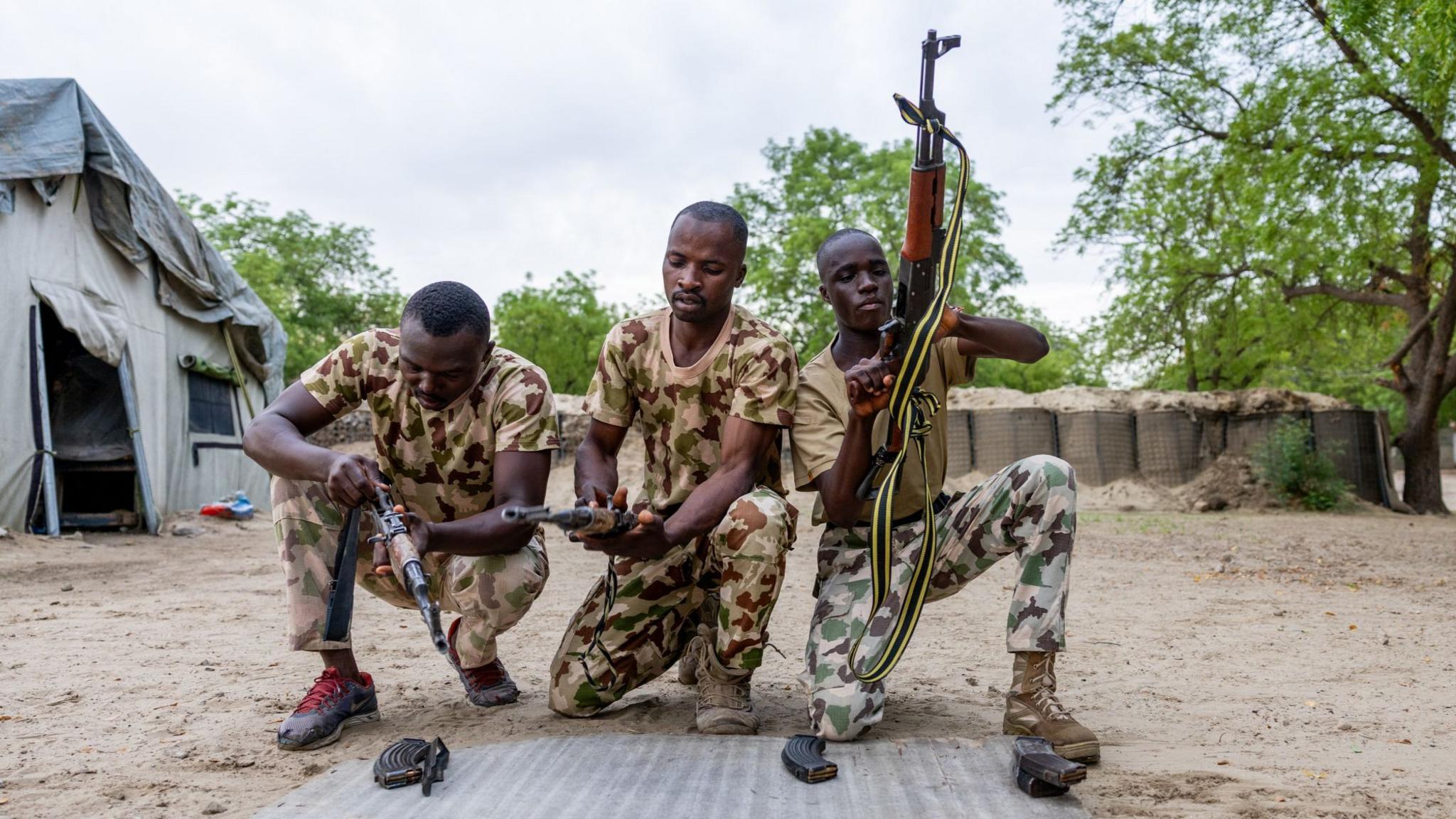
In a decisive move to address nationwide security challenges, Nigeria’s President Bola Tinubu announced the recruitment of 28,000 additional soldiers and the creation of four new army divisions, bringing the total number of divisions to twelve. The expansion aims to improve coordination, intelligence sharing and response times, particularly in the north‑west, north‑east and central regions where militancy, banditry and militia‑led violence are most acute.
Recent months have seen a surge in militant attacks, including the killing of at least 20 villagers in Zamfara and the abduction of 46 students in Borno. While the army successfully rescued those students, tensions persist as armed groups grow more sophisticated. To counter this, tinubu’s government also announced plans to establish three new army headquarters in strategically vulnerable areas.
Alongside the military expansion, Tinubu has earmarked 5.41 trillion naira (about $4 billion) for defence and security in the annual budget, and a further 50,000 police officers will be recruited to bolster law enforcement. The president has vowed that armed groups either surrender or face the full “state of the art” force of the country, signalling a stern stance against insurgents.
While the move is welcomed by security analysts who believe it could sharpen Nigeria’s response capabilities, critics worry about the social impact of a larger standing army. Human rights groups have cautioned that increased militarisation may threaten civil liberties and that recruitment should be coupled with transparency and accountability measures.
The plan follows a joint U.S.–Nigerian operation in December that targeted jihadist groups in the Lake Chad Basin, but insurgents continue to fight back. The overall assessment by opposition parties is that the expansion should be part of a broader strategy that includes community engagement, development programs and careful oversight to avoid an escalation in militarised conflict.