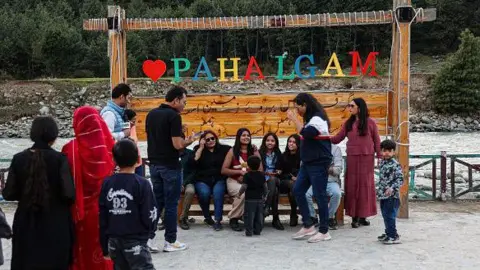
In Pahalgam, the sound of phones ringing is common, with guides like 30-year-old Nazakat Ali constantly reassuring hesitant tourists that the region is safe to visit. There is a lot of fear, he admits, a sentiment shared across the community a year after a tragic incident in which militants killed 26 people in what was one of the deadliest attacks on tourists in Kashmir's recent history. The tourism sector, crucial to the local economy, has struggled to recover since the attack, which saw authorities shut down many popular sites and drastically reduce visitor numbers from nearly three million in 2024 to below 1.2 million in 2025.
As local businesses reel from the effects, with many reporting significant losses, those involved in the tourism industry express hope for revival amidst a backdrop of uncertainty. While efforts are underway to promote the region as returning to normalcy, locals remain concerned about safety, driven by memories of last year's violence that not only claimed lives but altered the very fabric of their community. Despite the challenges, some families have ventured into Pahalgam, hinting at a gradual return of confidence and tourism, though others like Abdul Waheed Bhat, head of a local association, note that this attack is different and its impact on public perception has been profound.
As Pahalgam seeks to navigate its path forward, both its natural beauty and the resilience of its people are hopeful to attract travelers once again, but lingering fears and memories cast a long shadow over the future.
As local businesses reel from the effects, with many reporting significant losses, those involved in the tourism industry express hope for revival amidst a backdrop of uncertainty. While efforts are underway to promote the region as returning to normalcy, locals remain concerned about safety, driven by memories of last year's violence that not only claimed lives but altered the very fabric of their community. Despite the challenges, some families have ventured into Pahalgam, hinting at a gradual return of confidence and tourism, though others like Abdul Waheed Bhat, head of a local association, note that this attack is different and its impact on public perception has been profound.
As Pahalgam seeks to navigate its path forward, both its natural beauty and the resilience of its people are hopeful to attract travelers once again, but lingering fears and memories cast a long shadow over the future.