In brief
As the outbreak of African Swine Fever (ASF) poses a serious threat to Spain's significant pork industry, farmers like Jordi Saltiveri are experiencing substantial financial losses. With pork prices dropping and exports halted, the situation calls for immediate attention to control the disease and protect the nation's economic interests.
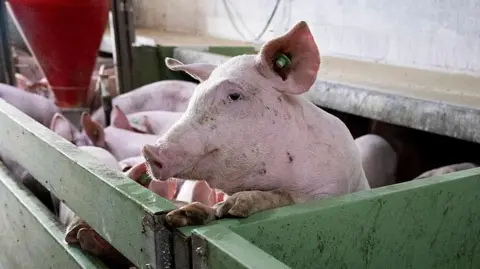
Jordi Saltiveri gazes across his farmland, on which he keeps 8,000 pigs, and remembers the day late last year when the news emerged that African Swine Fever (ASF) had been detected in Spain.
I felt sad, angry, impotent, he says. Once it's known that a country is positive for ASF, other countries will stop importing its pork.
Saltiveri's farm, owned by his father and grandfather before him, is situated in an isolated spot in Lleida, Catalonia. The outbreak of the virus has not reached this area yet; however, the repercussions are already evident across Spain's pork sector.
Each pig we sell for slaughter has lost about €30 [$35; £26] to €40 of its value compared to before the outbreak, Saltiveri explains, raising concerns over significant losses.
ASF is highly contagious and lethal for pigs and wild boars, but it does not affect humans. Ground zero for this outbreak is Collserola Park, near Barcelona, where an infected wild boar carcass was discovered in late November.
Authorities closed the park and implemented search measures for more infected corpses. While an investigation into the outbreak's origin continues, overpopulation of wild boar has been recognized as a major vector for spreading ASF, causing issues in public safety and agriculture.
Current estimates suggest between 120,000 to 180,000 wild boars roam Catalonia, leading to culling efforts aimed at reducing their population.
Since the detection of ASF, numerous countries, including Brazil and Japan, have halted pork imports from Spain, while EU members and China have taken localized measures, impacting pork prices and sales across the region.
In January, Catalonia saw a 17% decrease in pork exports compared to the previous year, translating to a total loss of over €600 million for the Spanish pork industry since the onset of the crisis.
Efforts to rectify this situation include implementing strict biosecurity measures and learning from Belgium's successful elimination of ASF in the past. While some economists are optimistic, skepticism remains regarding the speed and effectiveness of current containment efforts.
Despite the surrounding challenges, domestic consumption remains steady, with consumers reassured by local market safety measures. In the wake of the drastic changes wrought by ASF, Spain's pork industry stands at a pivotal moment, threatening its longstanding agricultural heritage.