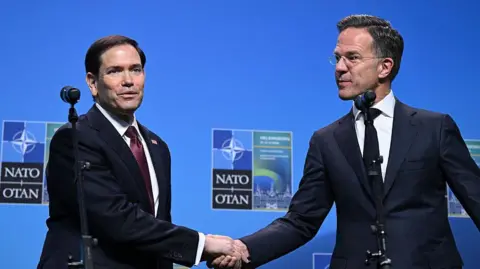
[ "In Sweden's Helsingborg, US Secretary of State Marco Rubio sought to calm NATO allies after a series of contradictory US troop announcements sparked confusion. Following President Donald Trump's abrupt decision to send an additional 5,000 troops to Poland—days after canceling a 4,000-deployment and withdrawing 5,000 from Germany—Rubio emphasized that troop adjustments are 'constantly reevaluated' in coordination with allies. The move, tied to Trump's personal relationship with Polish President Karol Nawrocki, highlights the shifting priorities of a US security strategy increasingly shaped by 'America First' imperatives.", "### US Political Perspective
Rubio framed the troop movements as part of a strategic recalibration reflecting America's global commitments. 'It's well understood in the alliance that the US troop presence in Europe is going to be adjusted,' he stated, noting that these decisions prioritize 'global responsibilities' including Middle East stability. This aligns with the White House's broader push to reduce European troop levels, signaling a departure from the post-Cold War consensus where US forces formed the backbone of NATO's eastern defense. Trump's actions reveal deepening tensions between US unilateralism and European expectations of sustained security guarantees.", "### European Security Perspective
NATO allies expressed concern over the instability created by the conflicting announcements. Swedish Foreign Minister Maria Malmer Stenergard admitted the situation 'is confusing indeed,' noting the difficulty of navigating such shifts while Russia continues its war in Ukraine. While the US remains the largest contributor to NATO's military capabilities—maintaining over 36,000 troops in Germany and 12,000 in Italy—many European nations have pushed for increased defense spending to reduce dependence on Washington. Rutte's statement that 'Europe is moving toward less reliance on the US' underscores a strategic pivot, though the immediate uncertainty risks undermining NATO's cohesion during Russia's invasion.", "### Historical Context
This marks a pivotal shift from the post-1991 era where US forces were largely permanent fixtures. Following the Cold War, NATO's presence in Europe was often 'automatic' for member states, with US troops reinforcing European defenses. Now, however, European allies increasingly seek to build independent capabilities. As one NATO official noted, 'We're not just talking about numbers but institutional trust.' The troop adjustments reflect a long-term transformation: the US remains the strongest deterrent against Russian aggression, but European defense autonomy is accelerating.", "### Geopolitical Implications
Russia's reaction remains muted in public statements, though it views Western troop movements as provocative. Analysts suggest Moscow may exploit the uncertainty to bolster its military posture along Ukraine's border. Meanwhile, the US pivot to the Middle East—where troops are deployed against Iran—creates competing security demands. The troop deployments to Poland, while intended as a show of support for Ukraine, may also signal a more confrontational stance toward Russia, potentially escalating tensions. 'The US is walking a tightrope between reassuring Europe and managing its own strategic priorities,' observed a defense strategist at the Stockholm International Peace Research Institute.", "### Path Forward
With NATO Secretary General Mark Rutte asserting Europe's 'trajectory toward less reliance on the US' will continue, the alliance faces a pivotal challenge. Rubo's reassurances aim to maintain unity, but the absence of consistent policy signals risks eroding trust. As one European defense minister stated, 'We need to see clear lines of communication, not zigzagging decisions.' The coming months will test whether NATO can balance US security demands with European sovereignty needs in a volatile security landscape." ]}
Rubio framed the troop movements as part of a strategic recalibration reflecting America's global commitments. 'It's well understood in the alliance that the US troop presence in Europe is going to be adjusted,' he stated, noting that these decisions prioritize 'global responsibilities' including Middle East stability. This aligns with the White House's broader push to reduce European troop levels, signaling a departure from the post-Cold War consensus where US forces formed the backbone of NATO's eastern defense. Trump's actions reveal deepening tensions between US unilateralism and European expectations of sustained security guarantees.", "### European Security Perspective
NATO allies expressed concern over the instability created by the conflicting announcements. Swedish Foreign Minister Maria Malmer Stenergard admitted the situation 'is confusing indeed,' noting the difficulty of navigating such shifts while Russia continues its war in Ukraine. While the US remains the largest contributor to NATO's military capabilities—maintaining over 36,000 troops in Germany and 12,000 in Italy—many European nations have pushed for increased defense spending to reduce dependence on Washington. Rutte's statement that 'Europe is moving toward less reliance on the US' underscores a strategic pivot, though the immediate uncertainty risks undermining NATO's cohesion during Russia's invasion.", "### Historical Context
This marks a pivotal shift from the post-1991 era where US forces were largely permanent fixtures. Following the Cold War, NATO's presence in Europe was often 'automatic' for member states, with US troops reinforcing European defenses. Now, however, European allies increasingly seek to build independent capabilities. As one NATO official noted, 'We're not just talking about numbers but institutional trust.' The troop adjustments reflect a long-term transformation: the US remains the strongest deterrent against Russian aggression, but European defense autonomy is accelerating.", "### Geopolitical Implications
Russia's reaction remains muted in public statements, though it views Western troop movements as provocative. Analysts suggest Moscow may exploit the uncertainty to bolster its military posture along Ukraine's border. Meanwhile, the US pivot to the Middle East—where troops are deployed against Iran—creates competing security demands. The troop deployments to Poland, while intended as a show of support for Ukraine, may also signal a more confrontational stance toward Russia, potentially escalating tensions. 'The US is walking a tightrope between reassuring Europe and managing its own strategic priorities,' observed a defense strategist at the Stockholm International Peace Research Institute.", "### Path Forward
With NATO Secretary General Mark Rutte asserting Europe's 'trajectory toward less reliance on the US' will continue, the alliance faces a pivotal challenge. Rubo's reassurances aim to maintain unity, but the absence of consistent policy signals risks eroding trust. As one European defense minister stated, 'We need to see clear lines of communication, not zigzagging decisions.' The coming months will test whether NATO can balance US security demands with European sovereignty needs in a volatile security landscape." ]}