WASHINGTON — A warmer planet could bring a surge in large hailstones, according to a study released on Wednesday in the peer‑reviewed journal *Nature*. Climate scientists argue that increased atmospheric moisture from global warming fuels stronger updrafts that can lift more droplets into ice‑forming layers and grow into larger hail.
John Allen, a meteorology professor at Central Michigan University and co‑author of the study, explained that higher temperatures add about 4 % more water vapor per additional degree Fahrenheit, which translates into more robust thunderstorms. “That extra energy allows updrafts to reach higher altitudes where hail can develop into larger stones,” Allen told reporters from Guymon, Oklahoma, where he and other scientists have been traveling through hail‑prone regions.
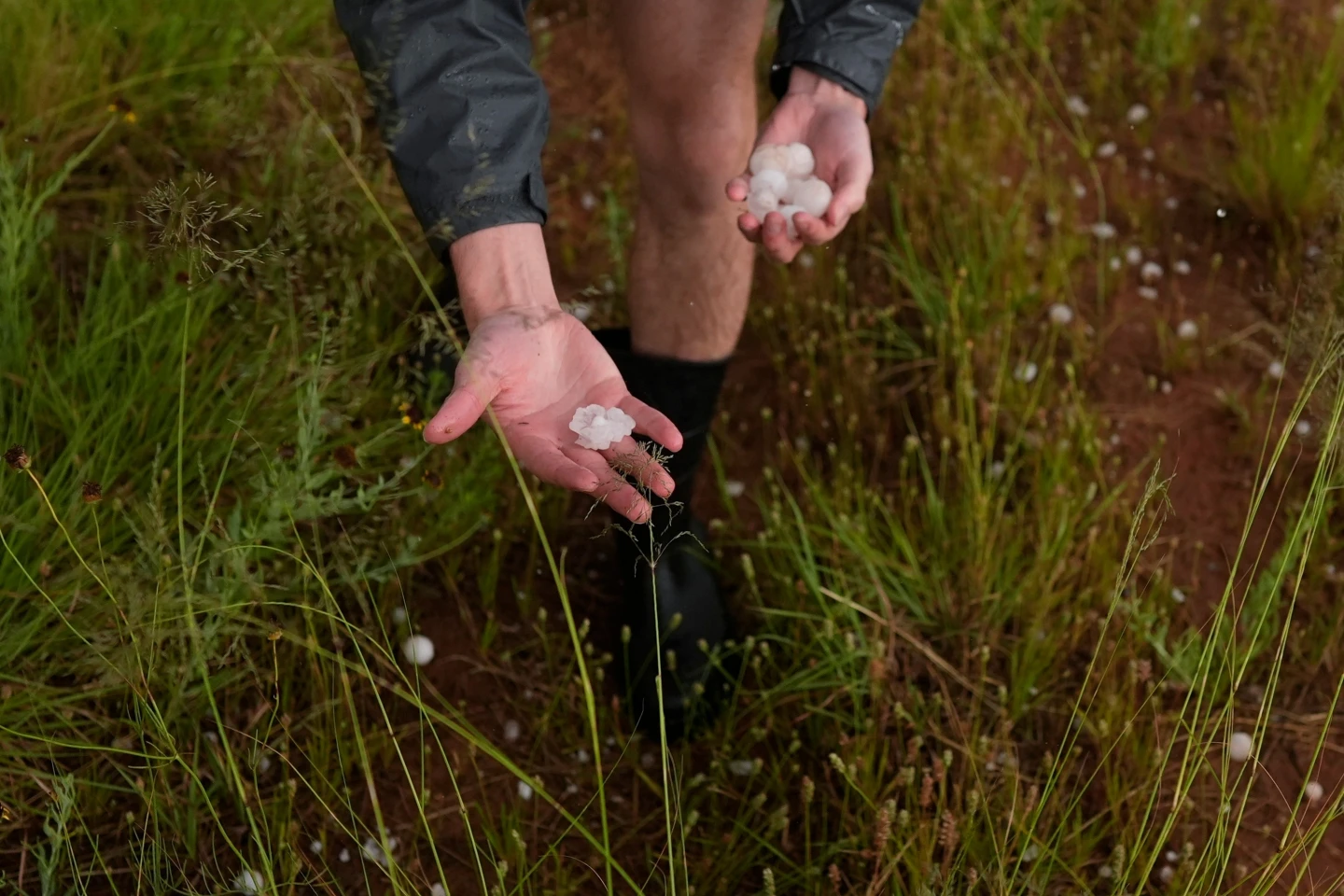
The research team used a high‑resolution, three‑dimensional model to simulate hail formation under three different carbon emissions pathways. Even in the best‑case scenario of modest warming, the authors project that hailstones larger than 1.2 inches (≈30 mm) – roughly the size of a marble – could increase by 38 %. In a more pessimistic scenario where temperatures rise almost 2 °F (≈1 °C) beyond today’s levels, the increase jumps to 47 %. Conversely, the frequency of smaller hailstones would decline by 4–8 %.
Hall size matters economically. Allen noted that larger hail is far more destructive: vehicles, roofs, solar panels, and other infrastructure can be damaged in a single storm. Though hail doesn’t typically kill people, the United States has already incurred about $10 billion in damage each year, and the global cost is estimated at $80 billion. “We’re not building our structures to be resilient to hail, and that’s a serious oversight,” Allen added.
The findings add to a growing body of research illustrating how climate change reshapes extreme weather patterns. While previous studies have focused on hail frequency in the United States, this study expands the scope to global regions. Experts from other disciplines caution that the true economic impact depends on where people choose to live and build.
Northern Illinois meteorology professor Walker Ashley, who was not involved in the study, said the projected increase in “potential for larger hail” is a clear climate signal, but noted that disaster losses will also hinge on land‑use decisions and structural resilience. “Where people build, what type of materials they use, and how prepared they are will all shape future losses,” Ashley said.
The authors of the paper expect significant growth in large hail in Argentina, European countries, Canada, and the U.S. northern plains, whereas tropical regions may see reductions due to smaller stones melting. The study urges policymakers, planners and builders worldwide to incorporate hail resilience into infrastructure design as the climate continues to warm.
---
*The Associated Press’s climate coverage is financially supported by private foundations. For more information on AP’s funding disclosures, see the AP website.*}
John Allen, a meteorology professor at Central Michigan University and co‑author of the study, explained that higher temperatures add about 4 % more water vapor per additional degree Fahrenheit, which translates into more robust thunderstorms. “That extra energy allows updrafts to reach higher altitudes where hail can develop into larger stones,” Allen told reporters from Guymon, Oklahoma, where he and other scientists have been traveling through hail‑prone regions.
The research team used a high‑resolution, three‑dimensional model to simulate hail formation under three different carbon emissions pathways. Even in the best‑case scenario of modest warming, the authors project that hailstones larger than 1.2 inches (≈30 mm) – roughly the size of a marble – could increase by 38 %. In a more pessimistic scenario where temperatures rise almost 2 °F (≈1 °C) beyond today’s levels, the increase jumps to 47 %. Conversely, the frequency of smaller hailstones would decline by 4–8 %.
Hall size matters economically. Allen noted that larger hail is far more destructive: vehicles, roofs, solar panels, and other infrastructure can be damaged in a single storm. Though hail doesn’t typically kill people, the United States has already incurred about $10 billion in damage each year, and the global cost is estimated at $80 billion. “We’re not building our structures to be resilient to hail, and that’s a serious oversight,” Allen added.
The findings add to a growing body of research illustrating how climate change reshapes extreme weather patterns. While previous studies have focused on hail frequency in the United States, this study expands the scope to global regions. Experts from other disciplines caution that the true economic impact depends on where people choose to live and build.
Northern Illinois meteorology professor Walker Ashley, who was not involved in the study, said the projected increase in “potential for larger hail” is a clear climate signal, but noted that disaster losses will also hinge on land‑use decisions and structural resilience. “Where people build, what type of materials they use, and how prepared they are will all shape future losses,” Ashley said.
The authors of the paper expect significant growth in large hail in Argentina, European countries, Canada, and the U.S. northern plains, whereas tropical regions may see reductions due to smaller stones melting. The study urges policymakers, planners and builders worldwide to incorporate hail resilience into infrastructure design as the climate continues to warm.
---
*The Associated Press’s climate coverage is financially supported by private foundations. For more information on AP’s funding disclosures, see the AP website.*}