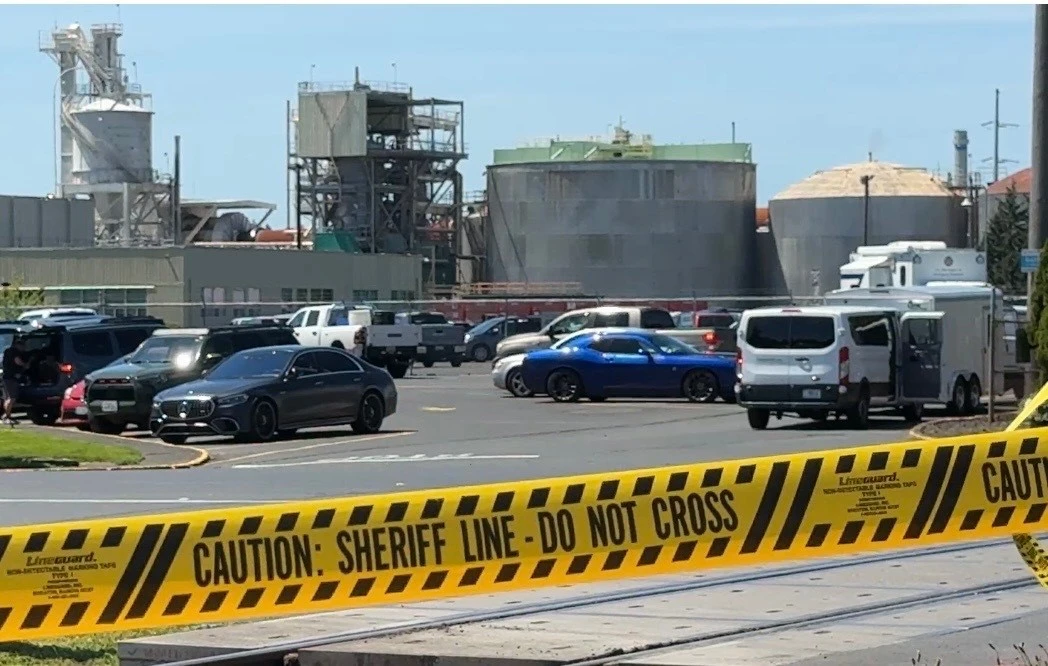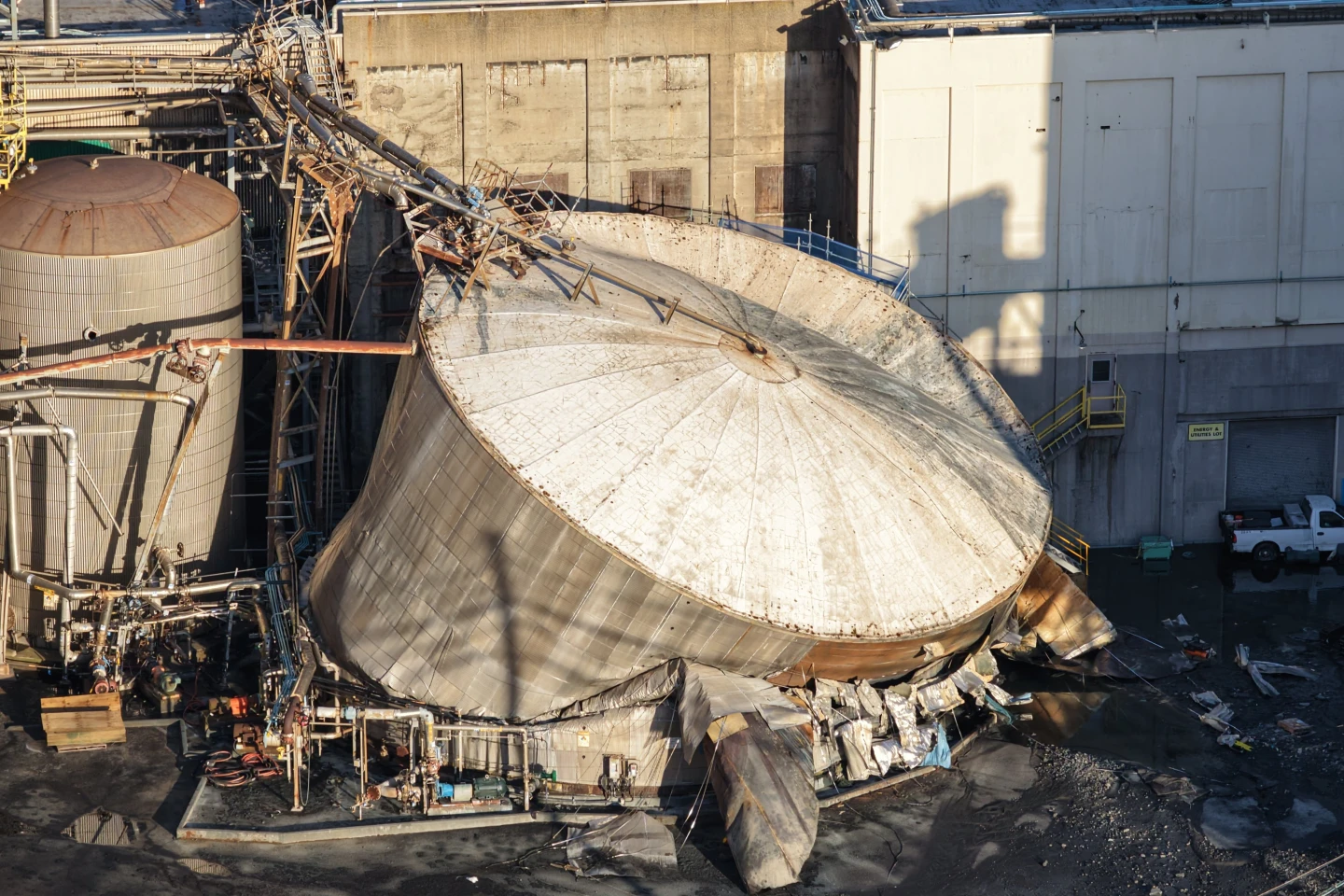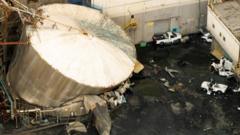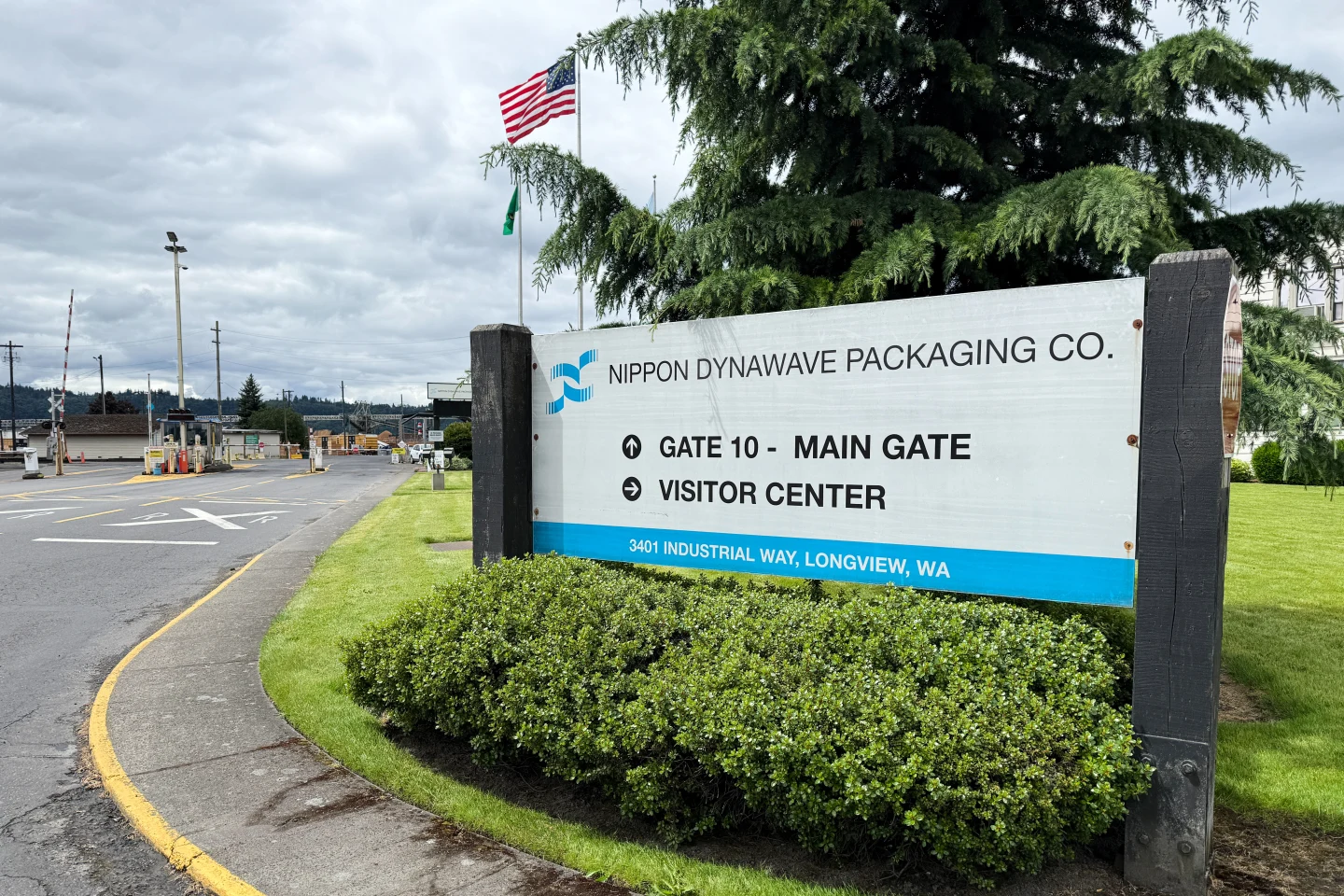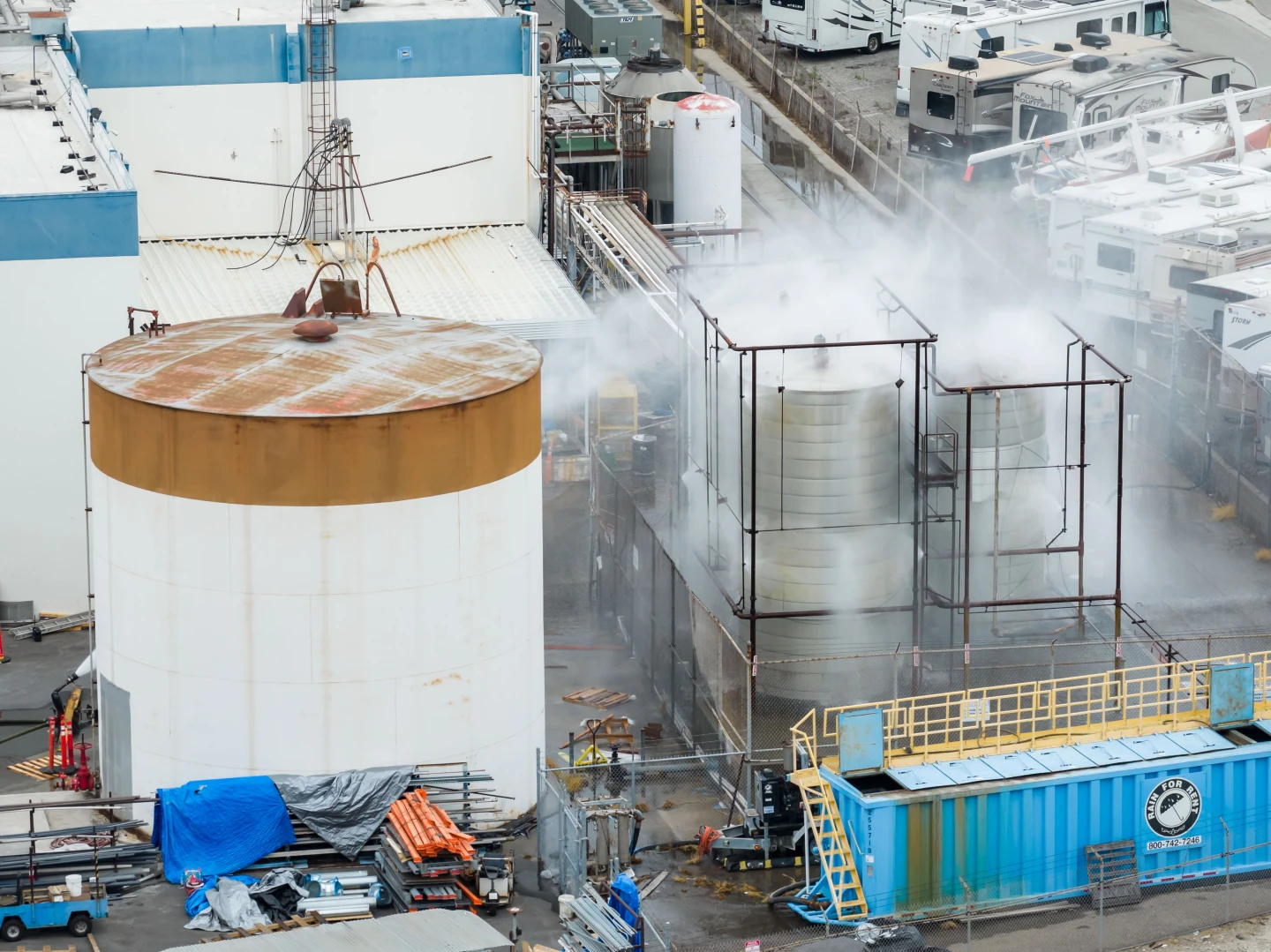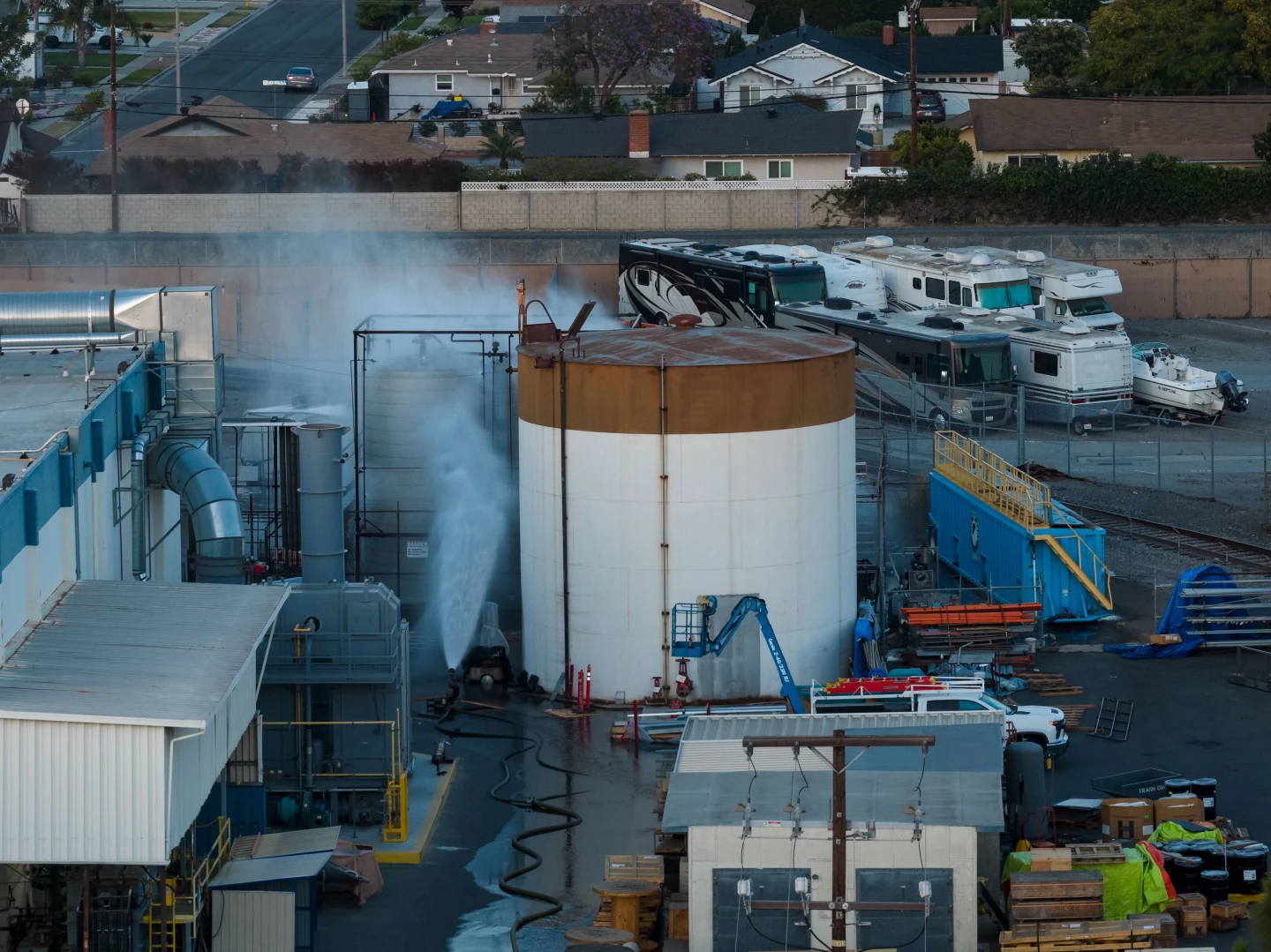
Longview, Washington – A massive chemical explosion tore through the Nippon Dynawave Packaging plant on Thursday, killing at least nine employees and injuring several others. The incident, which began the previous day with a rupture of a storage tank holding 500 000 gallons of white liquor, is one of the deadliest workplace accidents in U.S. history. Authorities have resumed a meticulous search for missing workers, with investigators describing the process as ‘slow and deliberate’ due to the lingering dangers posed by the corrosive chemical.
White liquor, a caustic by‑product of the paper‑making process, is highly corrosive and can severely blister skin and damage internal organs upon contact. While authorities reported that the spill had not contaminated the air or drinking water, the Washington Department of Ecology confirmed that a portion of the chemical did reach the Columbia River, the waterway adjacent to the plant. Environmental officials have said the impact has been “minimal,” but the event has raised new questions about the safety profiles of large industrial tanks on the West Coast.
The explosion is believed to have been caused by a tank failure – the exact circumstances of which authorities say are still under investigation. The plant’s parent company, Nippon Paper Group, said it was “offering its deepest condolences and heartfelt sympathies to the bereaved families.” Meanwhile, the Union of 49th District worked to assure residents that the spill had not contaminated local waterways or air, and to coordinate cleanup efforts to reduce the risk of future incidents.
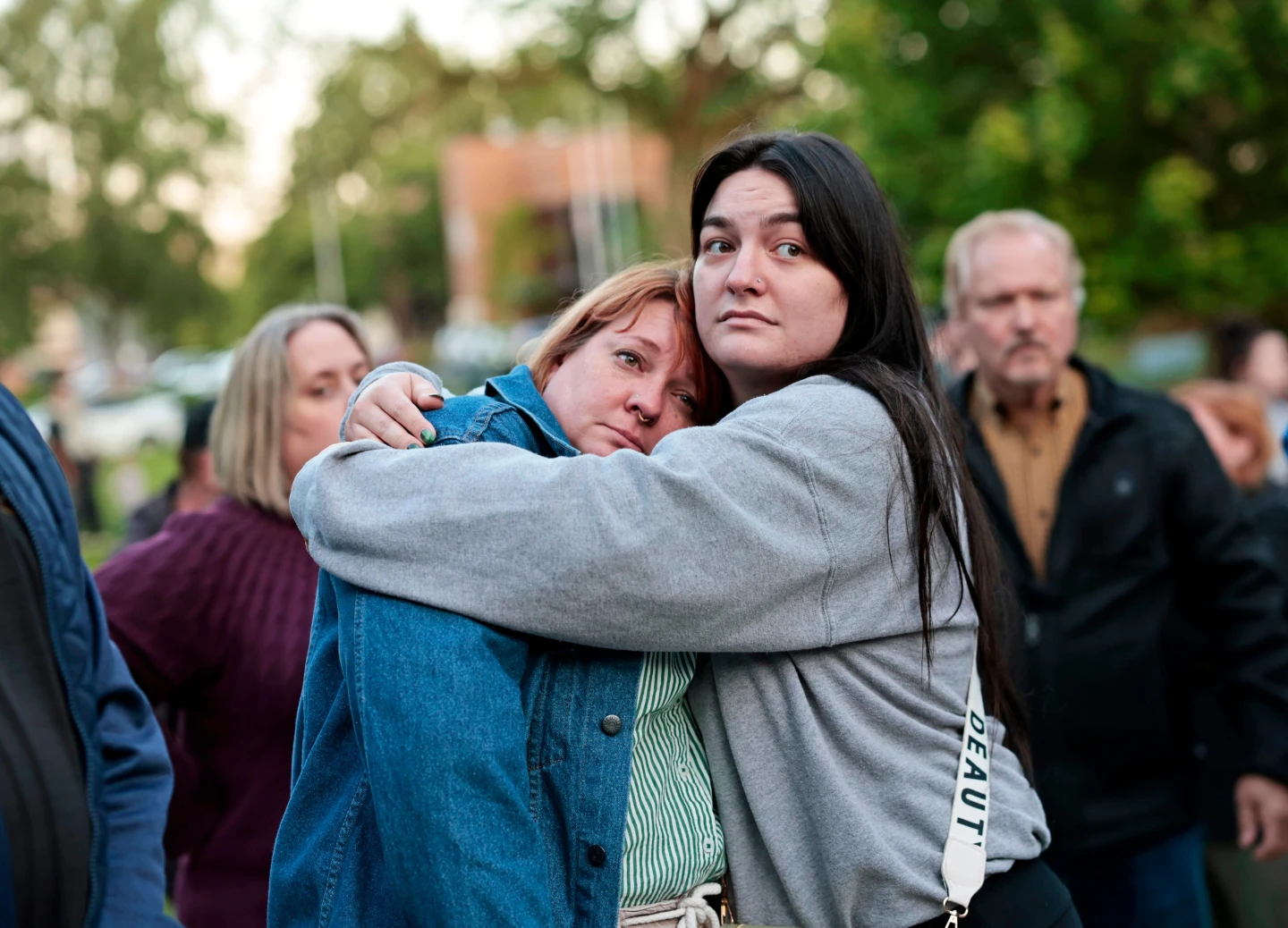
For many residents, the tragedy struck at the heart of a community long associated with paper and lumber mills. The Longview area, home to roughly 40,000 people, has deep ties to the industry and has produced several generations of plant workers. “I’ve had family members or friends who worked in the mills for years in the past and present,” a local resident told AP reporters. “It hits hard and everyone feels the loss.”
Among the confirmed or presumed dead is Gilbert Bernal, a 70‑year‑old electrician and grandfather. “He was one of the most genuinely good people you ever meet. He would give you the shirt off his back if you needed it. He was always there, willing to help in whatever needed to be done,” said a friend, Todd Cornwell. Bernal’s death has prompted a tribute from his community, who speak of his generosity and willingness to lend a hand in times of need.
Similarly, 26‑year‑old CJ Doran, a husband and caretaker, was among those presumed dead, according to a GoFundMe memorial verified by the crowdfunding site. The fundraiser’s post described him as “the spiritual leader of their family, the joy of their home, and the family provider.” Stories of the workers’ bravery were shared among colleagues, who organized fundraisers for the families and spoke of “selflessness” and “caring” that characterized the victims’ personalities.
Beyond fatalities, the incident injured eight people, including a local firefighter, who suffered burns or inhalation injuries. “The injuries ranged from cuts and winds to smoke inhalation, and some were burnt by the chemicals,” said a spokesperson for the United States Fire Administration. The seven injured employees are being monitored for long‑term health effects because of the nature of the chemical involved.
The plant’s fire crews had reportedly worked to flush water from ditches near the facility and dilute it before pumping it into the Columbia River. While the Environmental Protection Agency has not reported a measurable effect, authorities continue to track contaminant levels and assess recovery options. Residents are encouraged to stay indoors and further cut back on outdoor activity, with public health warnings issued along the riverbank.
East v. West: As state officials review the causes and the tank’s design, a larger debate over the safety of large chemical tanks gains momentum. A range of policy analysts now argue that older facilities built for industrial giants may be more vulnerable to corrosion, and that stricter oversight would mitigate risks. In contrast, defense advocates say that current safety measures are adequate and that safety oversight has evolved dramatically in recent decades.
The AP’s Robert Johnson’s staff in Seattle, Martha Bellisle in Concord, New Hampshire, and John Seewer in Toledo, Ohio, helped produce this story, with additional reporting from Cater Enforcement, the Department of Labor’s Hazardous Materials Division and the West Coast Environmental Health Board. Future developments will depend on the outcomes of an investigation, the cleanup effort’s efficacy, and the community’s capacity to mourn and rebuild. In the meantime, the people of Longview will step into the unknown—trying to remember the lives lost and content survivors scared that their environment still lurks with hidden danger.
}