China's Emerging Global Brands: From Food to Fashion
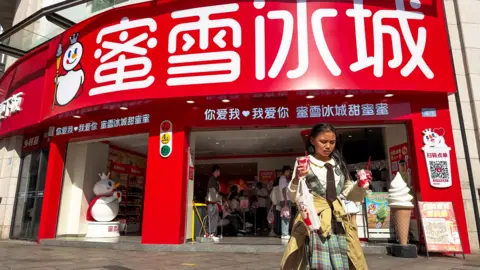
Step into any shopping mall in Singapore, and you’re likely to find queues outside vibrant outlets of Chinese brands like Chagee, Molly Tea, and Mixue, which have drawn crowds across the globe in cities like Sydney, London, and Los Angeles.
Side by side with renowned fashion brands, sportswear giants, and toy stores, these tea chains are part of a broader shift where Chinese firms transition from low-cost manufacturing to prominent global consumer brands.
Having been built within the world’s second-largest consumer market, these companies possess both the scale and operational capabilities to succeed globally. However, as competition intensifies at home, expansion into foreign markets has become essential. This shift occurs in a landscape where the perception of Made in China continues to be linked to low-quality goods.
Analysts note that China has moved past a purely replication-based economy, with products that now meet the expectations of increasingly discerning global consumers. Tim Parkinson from consultancy Storytellers China articulates that today's Chinese brands are not just manufacturers but innovators.
Factory of the World
Historically, China has been celebrated as the world’s factory, producing goods for Western companies. This environment has enabled suppliers to develop expertise in branding, distribution, and product sales.
For instance, the retailer Miniso has capitalized on this knowledge, operating stores in over half the countries globally. As General Manager Vincent Huang states, consumers care less about the origin of the brand and are focused on shopping experiences, meaning designs and value for money outweigh other concerns.
Market Dynamics
Beyond food and beverages, companies such as BYD have distinguished themselves in the electric vehicle (EV) segment, having overtaken Tesla to become the world's top EV manufacturer through early technology adoption and leveraging China's vast domestic market.
Government incentives have significantly boosted the Chinese EV sector, though they face pushback from Western nations, accusing these subsidies of being unfair. Nevertheless, China argues that its rapid growth is a result of innovation.
Another case in point is sportswear brand Anta, which now ranks as the world’s third-largest. It initially established dominance in the Chinese market while also acquiring international brands and diversifying its portfolio.
South East Asia as a Launchpad
As many Chinese enterprises venture into Western markets, Southeast Asia serves as a crucial testing ground, given its youthful consumer base and high standards set by established Western competitors. For example, Haidilao, the world's largest hotpot chain, has successfully established 1,300 restaurants in 14 countries since its first overseas outlet in Singapore in 2012.
As Zhou Zhaocheng, VP of Haidilao, explains, the brand’s success story demonstrates China's economic transformation and internationalization over the past 30 years. Its sustainable global presence enhances brand reputation and customer loyalty.
Emerging Trends and Challenges
Moreover, Chinese brands such as Mixue are outpacing giants like McDonald's in number of outlets. With over 70% of Chinese firms in Southeast Asia planning further expansion, the region is increasingly seen as an incubator for brand recognition and growth.
Despite this progress, challenges such as negative perceptions of Chinese brands, tariffs, and geopolitical tensions endure. Nevertheless, the paradigm is shifting as perceptions evolve from associating Made in China with cheapness to acknowledging quality and innovation.
The Road Ahead
Moving forward, Chinese brands are focusing on building substantial identities while tackling local market nuances. Brands like BYD successfully blend quality with local adaptations, a strategy that is vital for sustained growth in competitive landscapes.
Through innovation and adaptation, Chinese enterprises are set to redefine global consumer trends, indicating that they are no longer just inexpensive alternatives but serious competitors to established brands.