WASHINGTON (AP) — The Trump administration secretly reinstated a policy limiting access for Congress members to immigration detention facilities just a day after a federal immigration officer fatally shot a woman in Minneapolis, prompting congressional attorneys to seek federal court intervention.
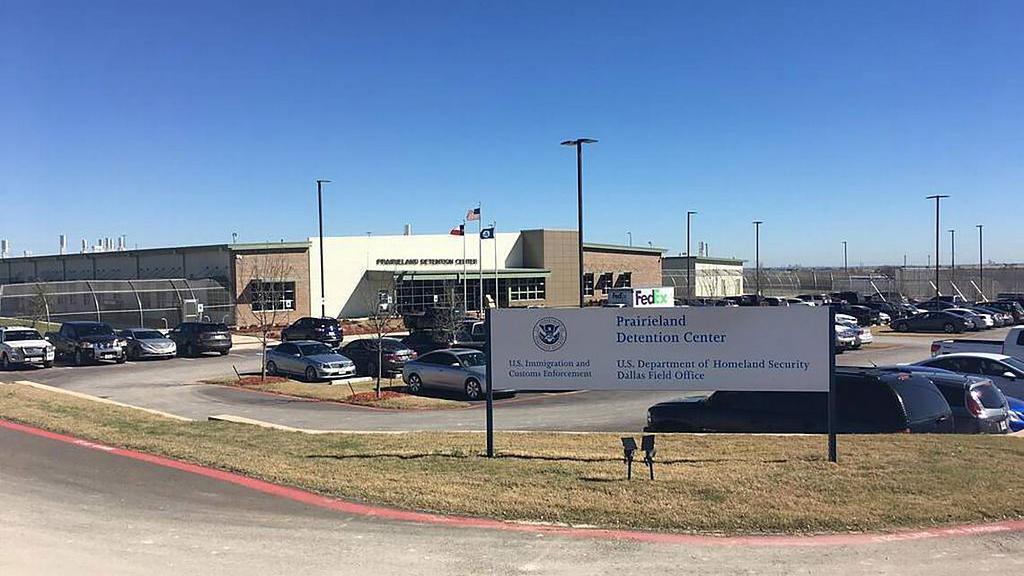
Three Democratic Congress members from Minnesota were barred from visiting an Immigration and Customs Enforcement (ICE) facility near Minneapolis this past Saturday, only three days after an ICE officer fatally shot U.S. citizen Renee Good in the city.
Last month, U.S. District Judge Jia Cobb ruled in Washington, D.C., that ICE could not enforce policies requiring members of Congress to provide a week's notice before visiting and observing conditions in ICE facilities—a decision now being challenged with the recent revival of this notice requirement.
The emergency hearing request by the plaintiffs emphasized the urgency of the situation, as Congress is in negotiations over funding for the Department of Homeland Security (DHS) and ICE, with a budget deadline approaching on January 30.
According to the attorneys, conducting oversight without prior notice is crucial to gathering necessary information for the ongoing budget discussions. The plaintiffs' lawyers argue that recent events highlight the potential obstruction of Congressional oversight by the Trump administration through such policy reinstatements.
On the day of their blocked visit, U.S. Reps. Ilhan Omar, Kelly Morrison, and Angie Craig were initially permitted entry into the ICE facility but were asked to leave shortly thereafter, as officials cited a newly enforced seven-day notice policy for oversight visits. This reinstatement followed a memorandum signed by DHS Secretary Kristi Noem, who issued the new policy a day after Good's death.
Judge Cobb previously ruled against similar restrictions in a case involving a group of Congress members who claimed that the administration was obstructing oversight as immigration enforcement operations escalated nationwide. The judge dismissed government arguments that legislators had no standing to challenge such policies and that conditions in detention centers wouldn’t change significantly in a week.
“The changing conditions within ICE facilities mean that it is likely impossible for a Member of Congress to reconstruct the conditions at a facility on the day that they initially sought to enter,” Cobb stated in her ruling.
Legal restrictions prevent DHS from using appropriated funds to inhibit Congressional access to its facilities for oversight. The Democracy Forward Foundation, representing the plaintiffs, noted that the administration failed to demonstrate that no appropriated funds are being utilized to implement the new notice requirement.