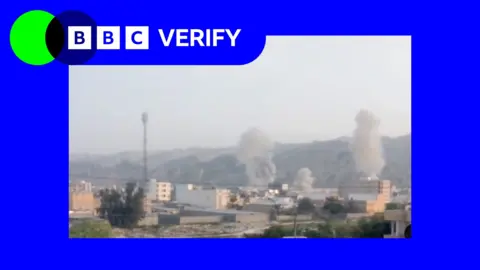
Multiple weapons experts have disputed a US claim that Iran may have been responsible for a deadly strike on the town of Lamerd on the first day of the war.
Six experts - who examined footage of the strike and all commented independently - contested the US suggestion that it was an Iranian missile, citing the missile's visual features, the way it exploded, its trajectory and the number of strikes in the area as the basis for their analysis.
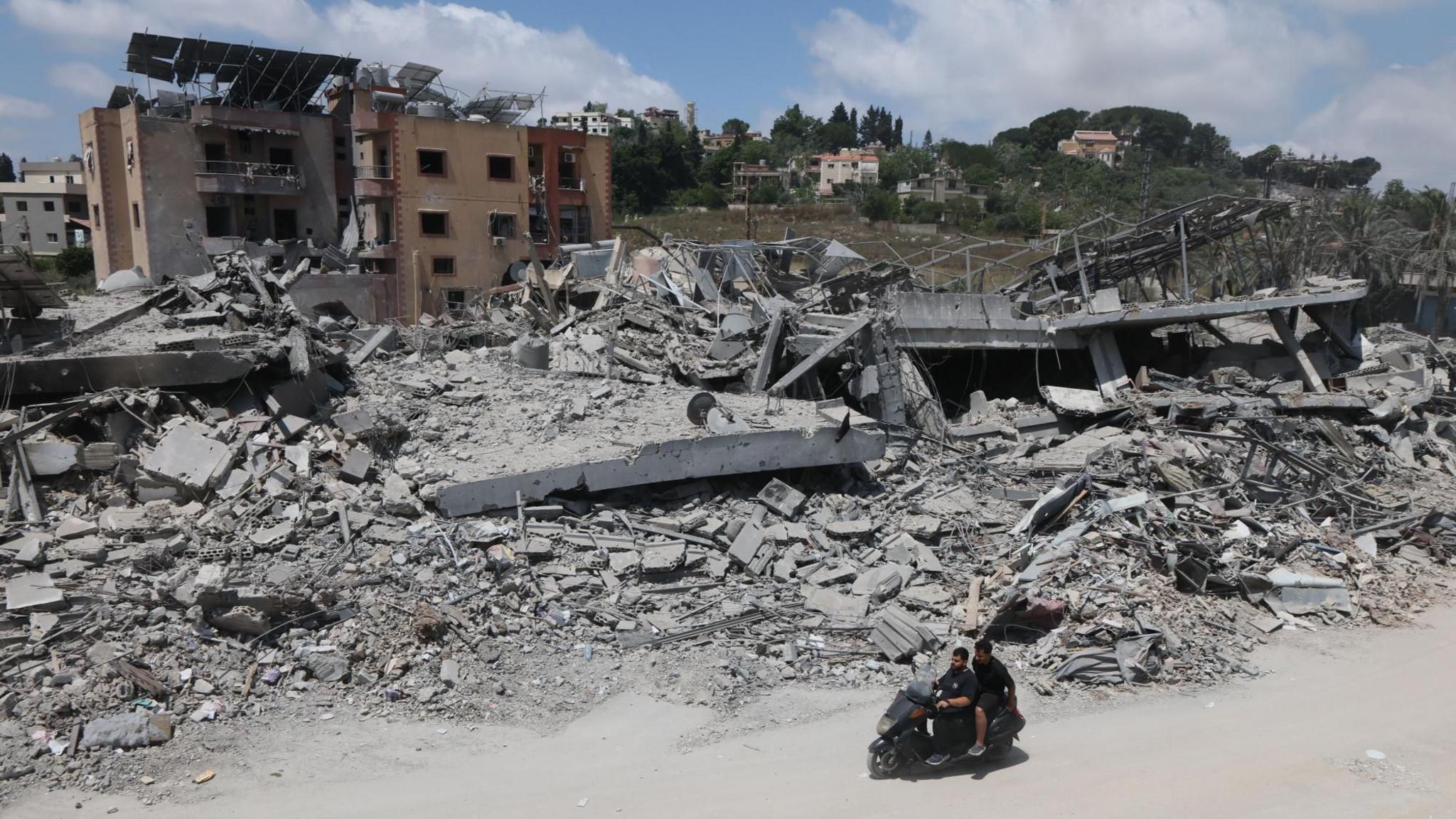
Iranian officials have reported that 21 people, including four children, were killed.
BBC Verify previously reported on the strikes on March 28, suggesting that a US Precision Strike Missile (PrSM) was likely used. The US Central Command (Centcom) has declined to comment on that report.
Centcom released a statement on March 31 denying it was a US missile, stating that the attack aligned with an Iranian Hoveyzeh cruise missile. The statement claimed, US forces do not target civilians, unlike the Iranian regime which has attacked civilian locations in neighboring countries more than 300 times.
When BBC Verify revisited Centcom with the experts' analysis, it said it had nothing to add to its original statement.
Lamerd, a town in southern Iran, was attacked on February 28. CCTV footage published by Iranian state media and verified by BBC showed a munition moments before it exploded above a residential area. Experts have identified it as likely being a US missile, based on its features and the blast size.
In the wake of the strike, multiple analytic reports, including one from a prominent U.S. media outlet, indicated that the weapon used may have been a PrSM. This was disputed by Centcom, which insisted that the missile shared characteristics with Iranian ordnance.
Weapons analysts noted specific design features of the missiles in question. A Hoveyzeh missile, according to experts, is distinctive due to its belly-mounted turbojet and mid-body wings, which were not apparent in the footage analyzed from the Lamerd assault.
The impact of these missiles and the context of the strikes has raised complicated questions regarding military actions in conflict zones and the nature of accountability for incidents leading to civilian casualties.
While U.S. forces maintain that they do not strike civilian targets, the debate around the origins of the missile in Lamerd continues to unfold as more information is scrutinized. U.S. Defense Secretary Pete Hegseth stated that the incident was under investigation and reiterated that U.S. forces never target civilian targets.