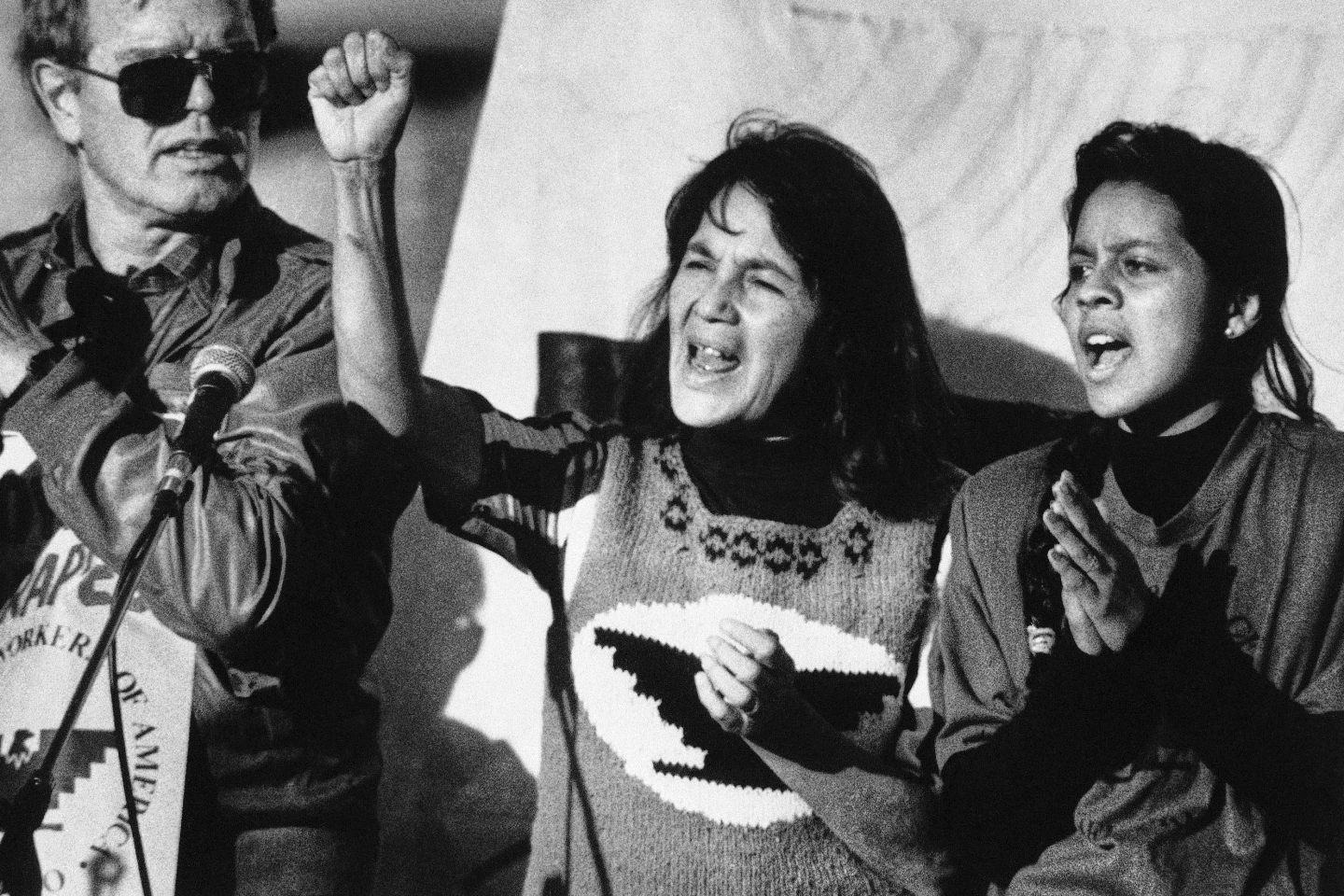
ALBUQUERQUE, N.M. (AP) — Dolores Huerta, a legendary labor leader and civil rights advocate, recently revealed that she was sexually abused by César Chavez, co-founder of the United Farm Workers union, which she helped establish. This confession, shared during a press conference, has shocked many and has raised complex discussions regarding the accountability of historical figures, even those seen as heroes in the fight for workers' rights.
Huerta, now nearly 96 years old, stated that she kept her abuse a secret for over 60 years, a decision driven by her dedication to the movement and its objectives: advocating for better conditions, wages, and rights for farmworkers. When first introduced to organizing in the 1950s, Huerta's passion for worker advocacy led her to form the National Farm Workers Association with Chavez.
“I channeled everything I had into advocating on behalf of millions of farm workers and others who were suffering and deserved equal rights,” Huerta elaborated, expressing her determination to not let personal trauma hinder the movement's progress.
The revelation has ignited a firestorm of responses from activists and leaders, some of whom are demanding the renaming of schools, streets, and landmarks that currently bear the name of César Chavez. They argue that honoring someone accused of such serious misconduct undermines the principles of justice and accountability.
Huerta’s legacy is filled with notable achievements; she coined the famous slogan “Si, se puede” meaning “Yes, it can be done”, which became a rallying cry for social justice movements, including Barack Obama’s presidential campaign. Yet, the controversy surrounding Chavez's actions now complicates her legacy.
As calls for change resonate across social media and in governmental circles, figures like U.S. Senator Martin Heinrich have expressed their support for Huerta and all those who come forward with their stories of abuse. He emphasized the importance of creating an environment where individuals can speak openly without fear of losing their voice in larger movements.
Huerta’s contributions to civil rights continue to inspire many, featuring her work for women's rights and advocacy for marginalized communities. Her courage in revealing her story adds another layer to the ongoing narrative of the fight for equality and justice.
As this narrative unfolds, the labor rights movement is reminded that the fight for justice must include accountability for all, ensuring that history reflects not only the achievements of individuals but also the stories of those who suffered in silence.