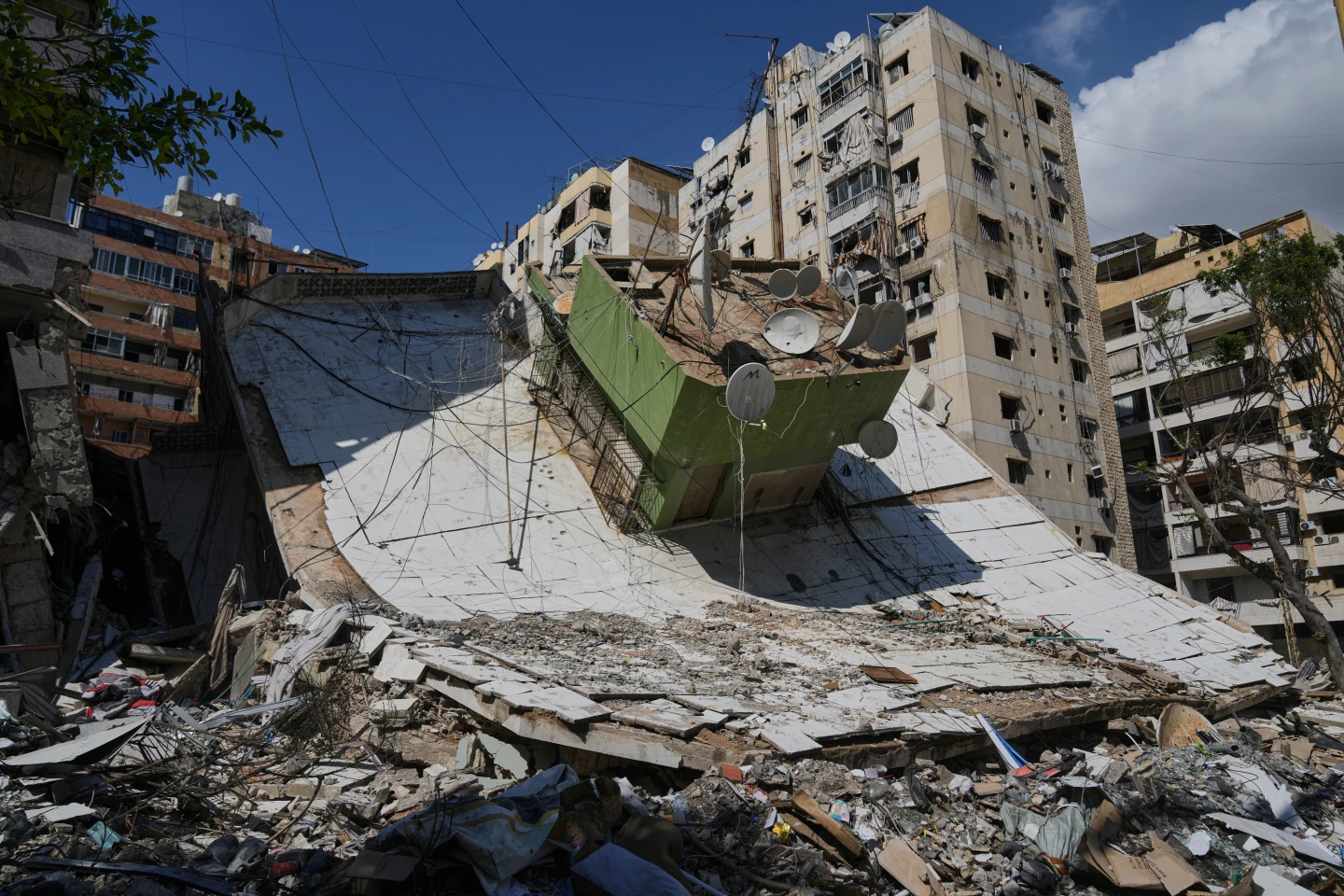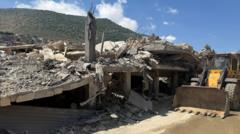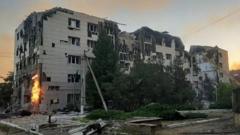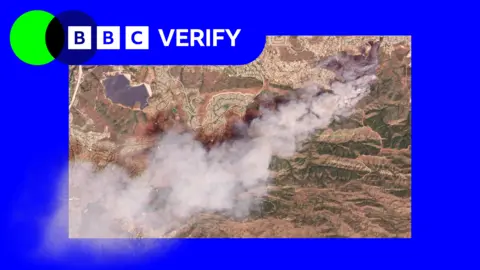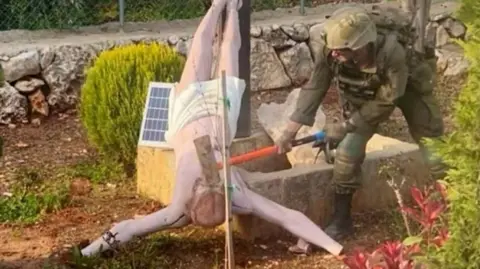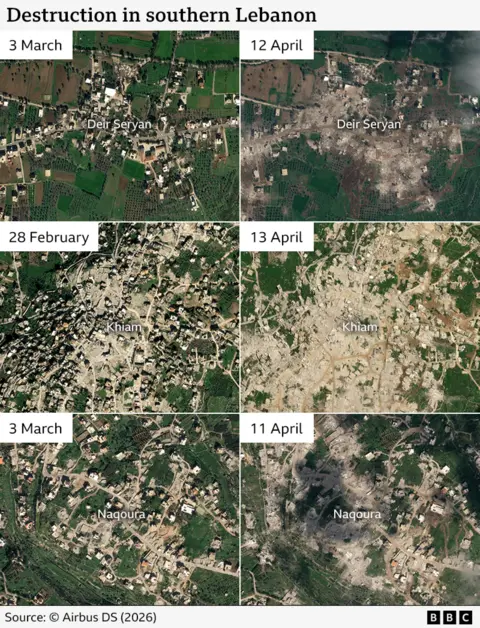
Towns and villages in southern Lebanon are being levelled by Israeli demolitions, satellite images and videos obtained by BBC Verify reveal.
BBC Verify analysis found more than 1,400 buildings had been destroyed since 2 March based on verified visual evidence.
This is just a snapshot of the overall damage caused by Israeli air strikes and demolitions, because of limited access on the ground and available satellite imagery. The true scale is likely to be much higher.
Israel's levelling of these structures comes after Defence Minister Israel Katz's order on 22 March to 'accelerate the destruction of Lebanese homes' near the Israeli border based on the 'model in Gaza' as part of its campaign against Hezbollah.
The systematic demolition of these towns and villages may amount to a war crime, international law experts told BBC Verify.
The Israel Defense Forces (IDF) said that it operates in accordance with the Law of Armed Conflict and does not allow the destruction of property unless there is an imperative military necessity.
It added, without providing evidence, that Hezbollah has embedded military infrastructure within civilian areas in the region.
On 2 March the Iranian-backed armed group Hezbollah launched rockets and drones into Israel in retaliation for the killing of Iran's supreme leader at the start of the war with Israel and the US.
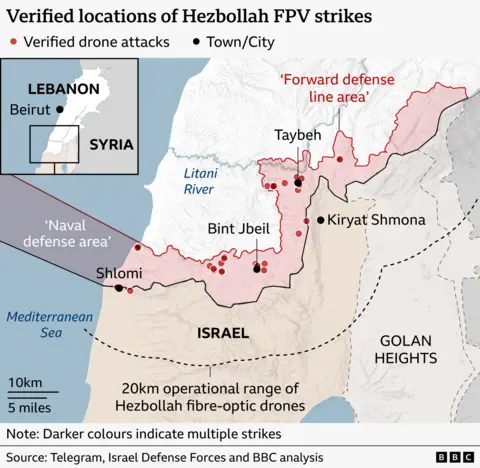
The IDF responded with a wave of strikes across Lebanon, targeting what it said was Hezbollah infrastructure, and launched a ground invasion of southern Lebanon.
An IDF spokesperson first ordered Lebanese civilians living close to the border to leave on 2 March. Days later the evacuation order was expanded to those living south of the Litani river and farther south to the Zahrani river.
The IDF said its troops began a ground operation against Hezbollah in south Lebanon on 16 March.
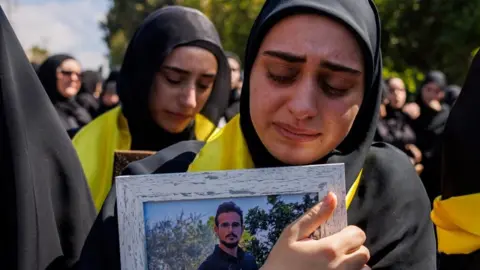
More than 1.2 million people are estimated to have been displaced across Lebanon, including 820,000 from the south, according to UN figures. The Lebanese health ministry reports over 2,000 people have died since the war began.
The situation has turned once vibrant border towns into landscapes of destruction, with numerous buildings demolished, leaving communities in ruins.
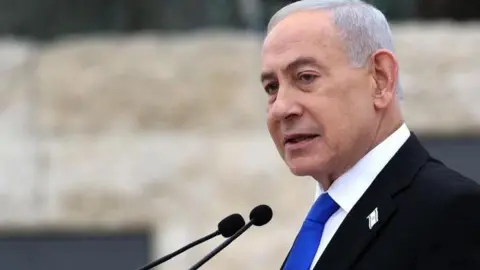
Israel's Prime Minister, Benjamin Netanyahu, indicated that a security zone extending into Lebanon would be established to thwart threats from Hezbollah.
Experts argue that while military necessity can justify some destruction, the systematic and widespread demolition of civilian infrastructure raises significant legal and humanitarian concerns. The IDF has consistently denied allegations of targeting civilians or conducting operations aimed at ethnic cleansing.
International law advocates emphasize that the destruction of property is prohibited unless necessary for military operations, underscoring the complex intersection of security and humanitarian law in conflict environments.