Ukrainian drones entered Estonian and Latvian air spaces from Russia overnight, with one hitting infrastructure and another crashing on land, Tallinn and Riga have said.
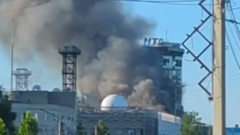
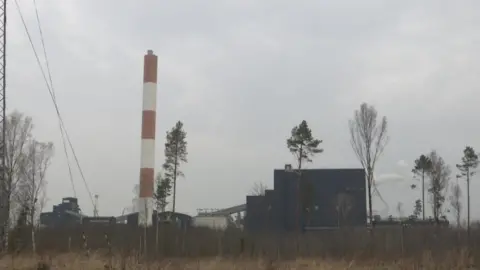
One struck the chimney of a power plant in Auvere, Estonia, while another exploded in the southern Kraslava region of Latvia.
No major damage or injuries were reported.
The incident occurred around the same time that Ukraine launched a massive drone attack on the Russian port of Ust-Luga on the Baltic Sea, some 25km (15 miles) from the Estonian border.
Estonian Prime Minister Kristen Michal stated that Ust-Luga was attacked in three waves between 03:00 and 08:00 local time. Baltic air patrols were activated, and residents received notifications on their phones warning of a drone threat.
Estonia's security police chief, Margo Palloson, confirmed that the drone which hit the power plant was a Ukrainian drone that deviated from its course, possibly affected by Russian airspace conditions.
Latvian Prime Minister Edgars Rinkevics also confirmed the drone that impacted Latvian territory was Ukrainian in origin.
In response to the incident, Latvia's Defence Minister Andris Spruds cut a visit to Ukraine short to return home.
Deputy Chief of Latvia's Joint Staff, Egils Lescinskis, mentioned that the drone likely veered off course due to electromagnetic warfare measures designed to protect important sites. Such measures can interfere with drone navigation systems.
When asked about local safety, Lescinskis acknowledged the difficulties of feeling secure while military operations are ongoing in nearby regions.
Palloson warned that more incidents could occur, along with Michal emphasizing the futility of expecting impenetrable borders while conflicts persist.
A similar event transpired recently in Lithuania, raising further questions regarding drone safety and airspace security in the region.
Ust-Luga serves as a significant oil export terminal. The drone attack there triggered a fire, which was subsequently controlled, according to local authorities.
This incident reflects the increasingly complex dynamics of drone warfare, particularly in and around the Baltic region where several nations are closely monitoring airspace security amidst ongoing tensions.