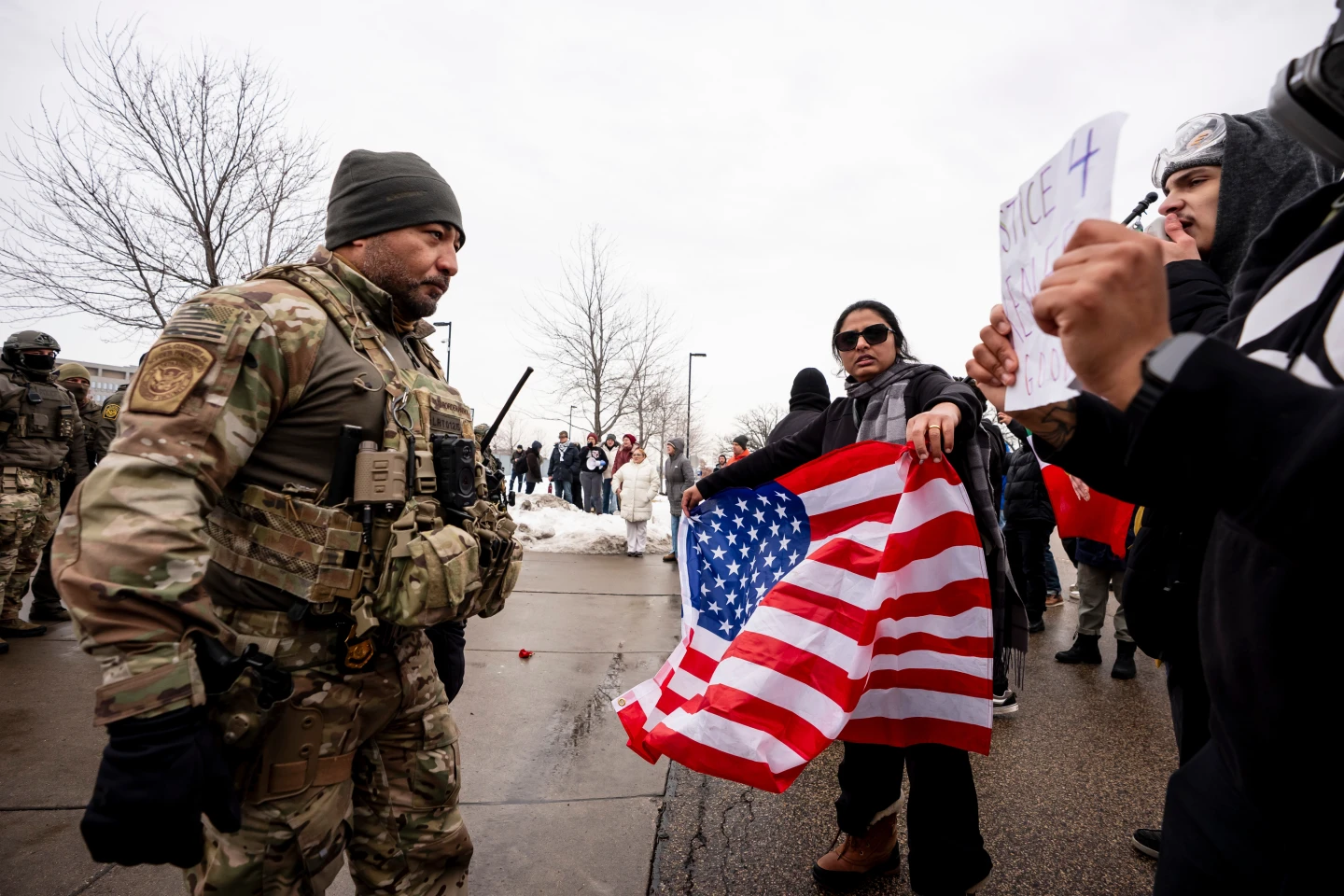
A day after the tragic shooting of Renee Good, a 37-year-old woman in Minneapolis by a federal immigration officer, tensions escalated over how the subsequent investigation would be handled. Federal authorities actively blocked Minnesota officials from participating in the inquiry and claimed jurisdictional supremacy based on their federal status.
Legal experts are weighing in on a complex issue that has surfaced time and again: can federal officers engaged in officially sanctioned operations be criminally investigated or charged under state law? The FBI has informed local law enforcement that they would not be permitted to engage in the investigation or access critical evidence surrounding Good's death.
Minnesota Governor Tim Walz publicly criticized federal leaders, including Homeland Security Secretary Kristi Noem, stating their premature defense of the agent might undermine public confidence in the investigation. Walz's appeal exemplifies broader concerns regarding transparency in situations where federal powers invoke jurisdictional claims.
Experts argue that state prosecutions against federal officials are complicated and seldom succeed, often stymied by claims of immunity under the Supremacy Clause of the Constitution. This legal principle typically shields federal employees from state accountability as long as their actions are deemed necessary for carrying out their lawful duties. However, it does not exempt them from all scrutiny if actions may violate state or federal laws.
Walz also remarked that residents of Minnesota were losing trust in the investigation’s independence due to the lack of collaboration between state and federal entities. Local authorities continue to pursue their own investigation despite federal resistance; however, they face significant challenges without access to evidence that may inform their conclusions.
Furthermore, state officials, including Attorney General Keith Ellison, underscored the need for parallel investigations without reliance on the FBI’s findings, which may not be shared under current directives. Past experiences, such as those seen in the prosecution of former Minneapolis police officer Derek Chauvin for the death of George Floyd, demonstrate the importance of such investigations for public accountability.
The challenges presented by this case, including previous decisions regarding the provision of medical assistance post-incident, may factor into the broader discussion of federal enforcement responsibilities and the implications of their actions on local communities.
As the investigation unfolds, the interplay between Federal jurisdiction and local accountability will remain in sharp focus, potentially setting precedents for future cases involving federal law enforcement and their interactions within state contexts.