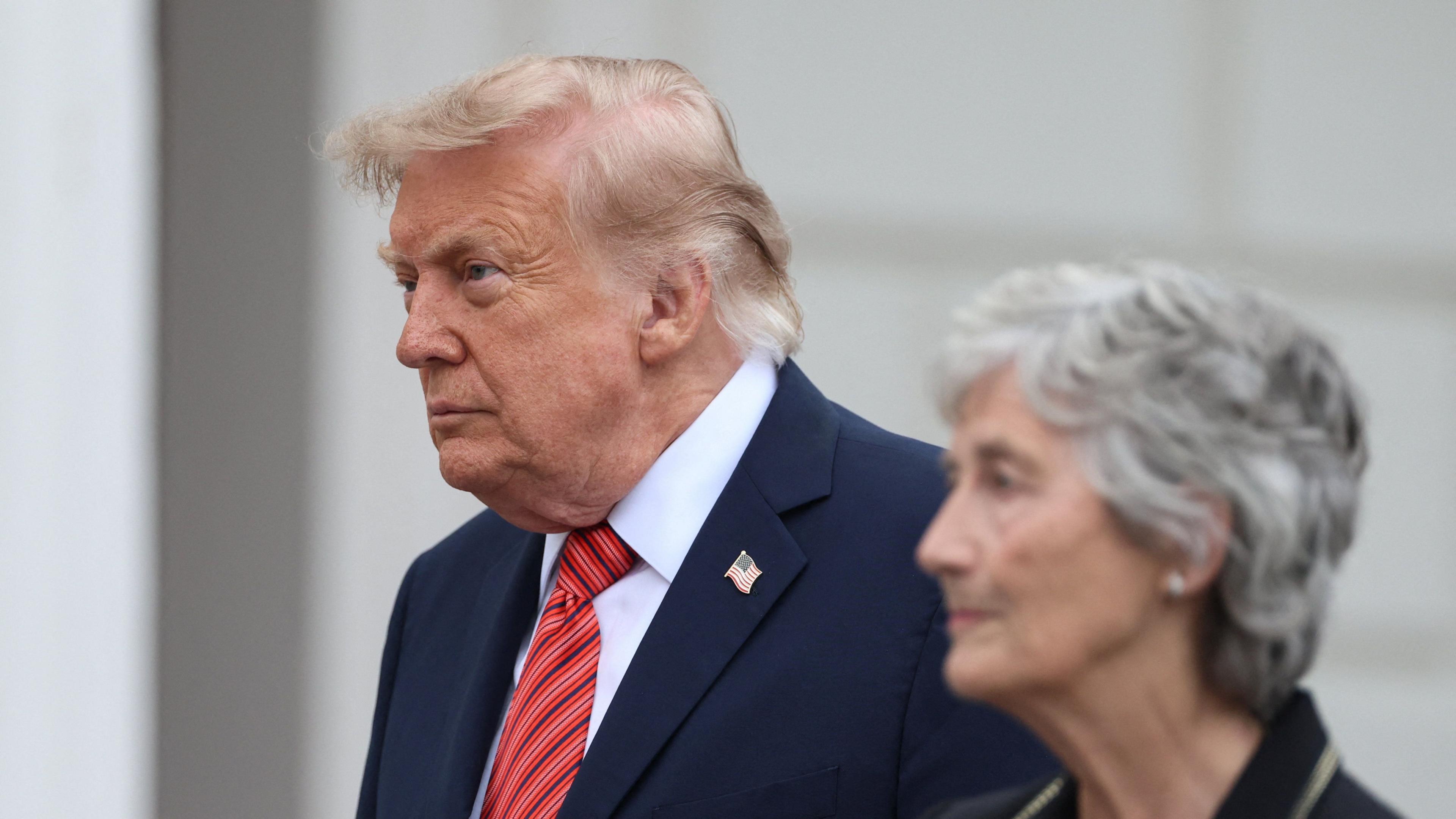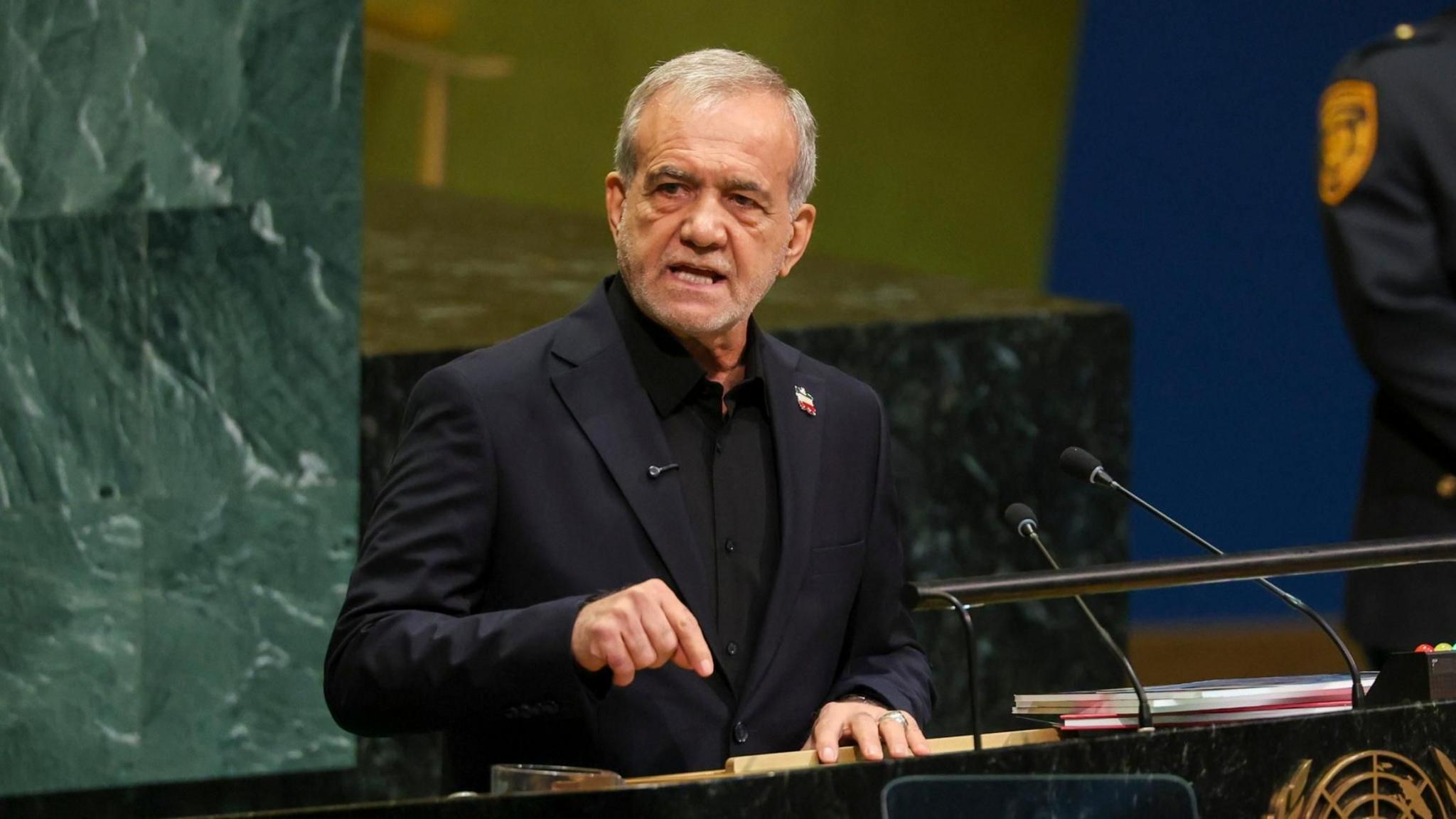
In a powerful address to the United Nations General Assembly, Iran’s President Masoud Pezeshkian warned that his country would not "bent the knee" to the United States and called Donald Trump’s threat to annihilate the Islamic Republic a sign of bullying.
Pezeshkian described the consequences of continued sanctions and military pressure, emphasizing that Iranian resistance would only grow.
He also demanded that any negotiated settlement include lifting the U.S. blockade that currently prevents Iranian vessels from passing freely through the Strait of Hormuz and that the world recognise an Iranian civilian nuclear programme without nuclear weapon ambitions.
The address came after a U.S.–Israeli joint strike on Tehran’s governor’s residence, which reportedly killed the Supreme Leader, and missile attacks that targeted schools and sports complexes, killing many civilians, mainly children. Pezeshkian used photos to illustrate the human cost of these assaults, framing the conflict as a struggle of Iran’s people against aggression.
At the same time, U.S. diplomatic officials left the chamber pending a response to the president’s sharp criticisms. Negotiations had reportedly been resumed under a Qatari‑mediated framework, but the U.S. blockade was reinstated after Iranian attacks on shipping resumed, undermining earlier agreements aimed at reopening the strait.
While warning against a force‑based solution, Pezeshkian stressed Iran’s willingness to negotiate without accepting any language of violence. The backdrop remains the persistent volatile state of U.S.–Iran tensions, underlined by international legal arguments over alleged war crimes tied to air strikes.
Sources: UN General Assembly speech, reports on maritime incidents, and statements by U.S. and Iranian officials.