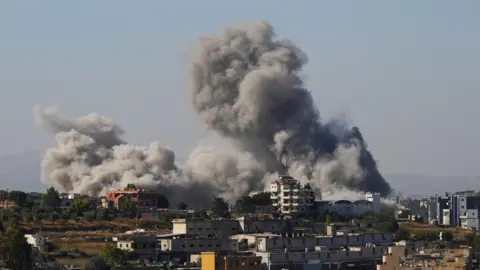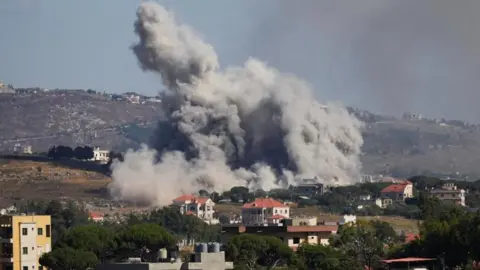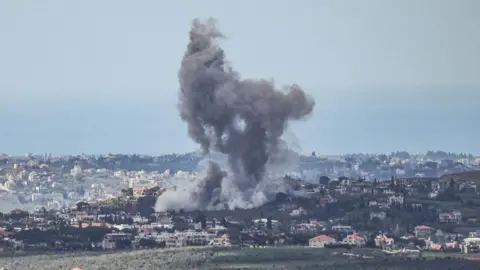
Israel's defence minister has said a buffer zone will be set up inside southern Lebanon and that Israel will keep security control over a swathe of the territory even after the end of the current war against the armed group Hezbollah.
Israel Katz said the area to be occupied would go up to the Litani River in southern Lebanon - about 30km (18.6 miles) from the border with Israel.
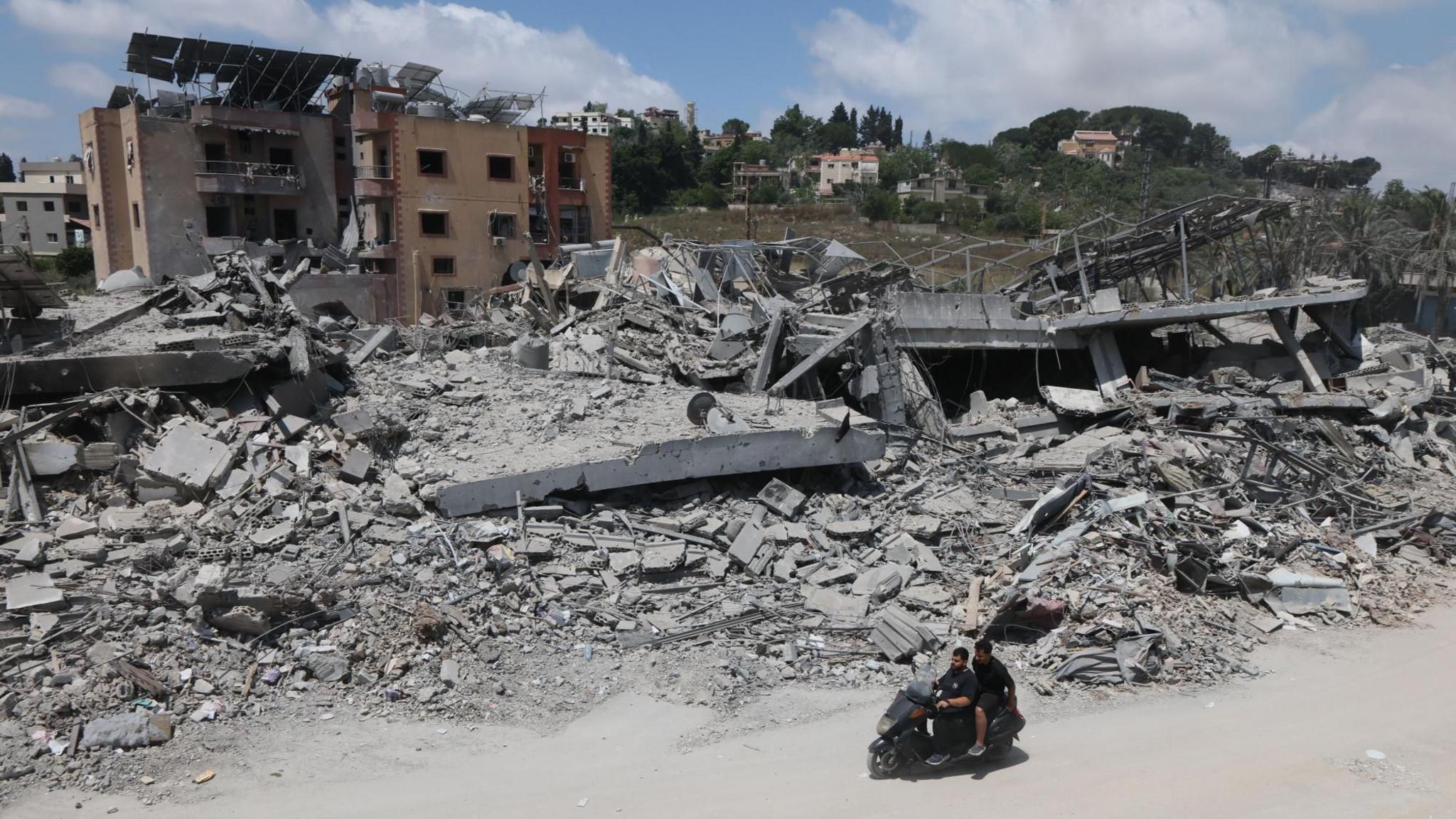
He also stated that all houses in Lebanese villages near the Israeli border would be demolished.
Israel sent ground troops into southern Lebanon on 2 March and has also been launching broad strikes across the country.
The action was taken after Hezbollah fired rockets into northern Israel in retaliation for Israel's assassination of Iran's supreme leader in late February, at the start of the war with Iran.
Israel was also conducting near-daily strikes on Hezbollah before that despite a ceasefire that was agreed in 2024.
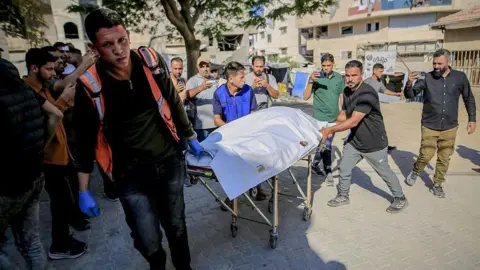
Since early March, at least 1,238 people have been killed in Lebanon, according to the Lebanese health ministry, including at least 124 children. The UN's humanitarian affairs office states 52 health workers have also been killed.
In the same period, 10 Israeli soldiers and two Israeli civilians have been killed by Hezbollah attacks, Israeli authorities say.
Others killed in the south in recent days include three Indonesian peacekeepers and three Lebanese journalists, according to the UN and the Lebanese health ministry.
The Israel Defense Forces (IDF) confirmed it killed two of the journalists, describing them as terrorists without providing evidence to back up its claims. It also said it was aware of reports a female journalist was killed.
It has not yet been established who killed the peacekeepers.
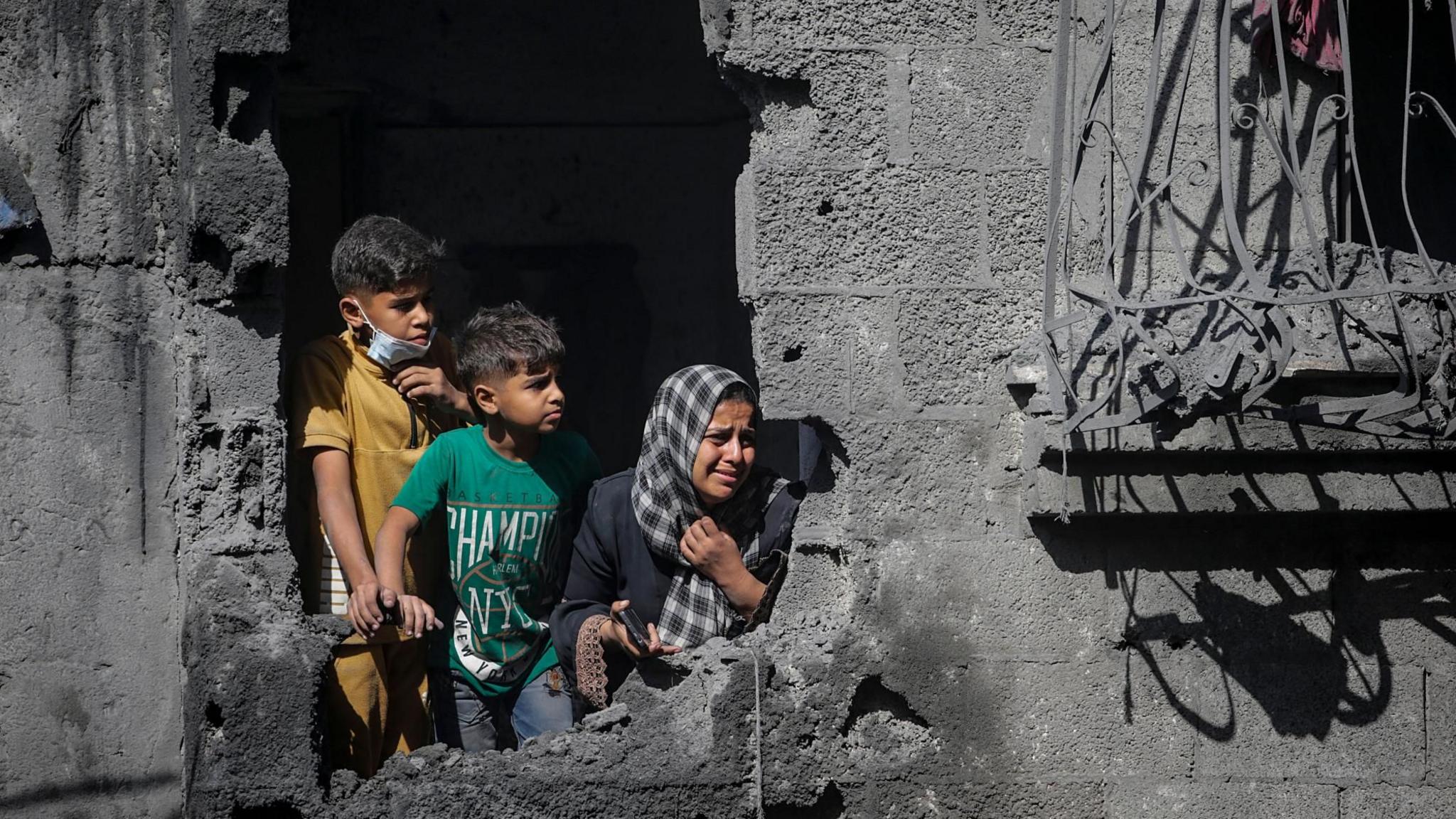
More than a million people—roughly one in every six in the country—have also been displaced, worsening an existing humanitarian crisis in Lebanon.
Israeli officials say the aim is to protect communities in northern Israel from Hezbollah attacks.
Israeli Defense Minister Katz provided a video statement sharing details on Israel's military intentions in southern Lebanon, stating, At the end of the operation, the IDF will establish itself in a security zone inside Lebanon, on a defensive line against anti-tank missiles, and will maintain security control over the entire area up to the Litani.
He highlighted that the return of over 600,000 residents of southern Lebanon, who evacuated northward, would be prohibited until safety for northern residents was ensured, and stated all houses in villages near the border would be destroyed.
Katz's declaration marks an escalation from previous statements where he aimed to create a buffer zone while emphasizing safety measures for Israeli residents.
Lebanon’s President Joseph Aoun condemned the Israeli plans as collective punishment against civilians, suggesting they might be part of suspicious schemes to expand Israel's territory.
Southern Lebanon, primarily inhabited by the Shia Muslim community and a support base for Hezbollah, is subject to increased military activity following this declaration, raising fears of escalating conflict and humanitarian crises.