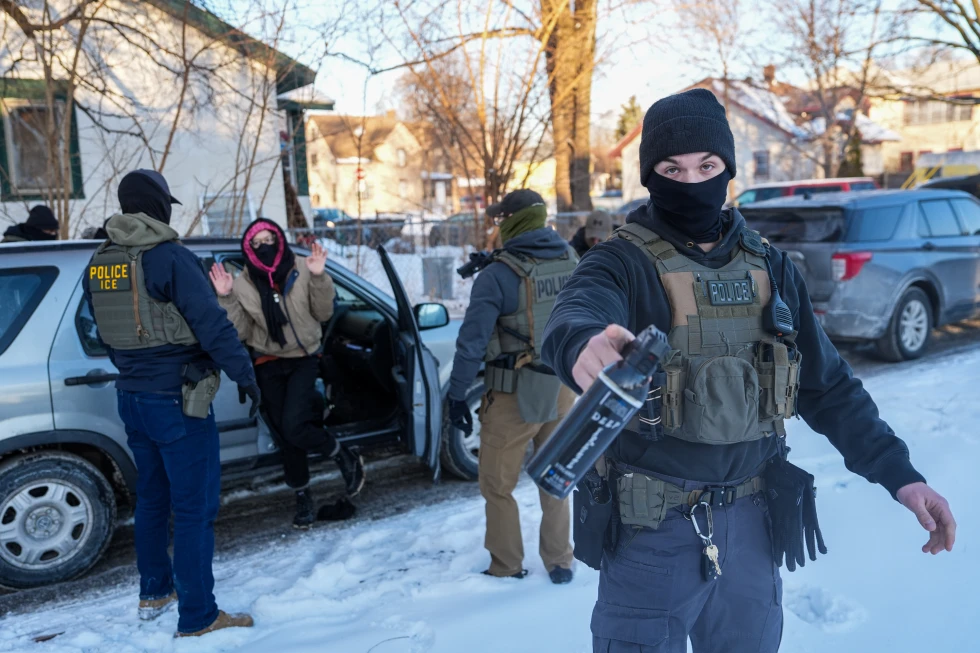
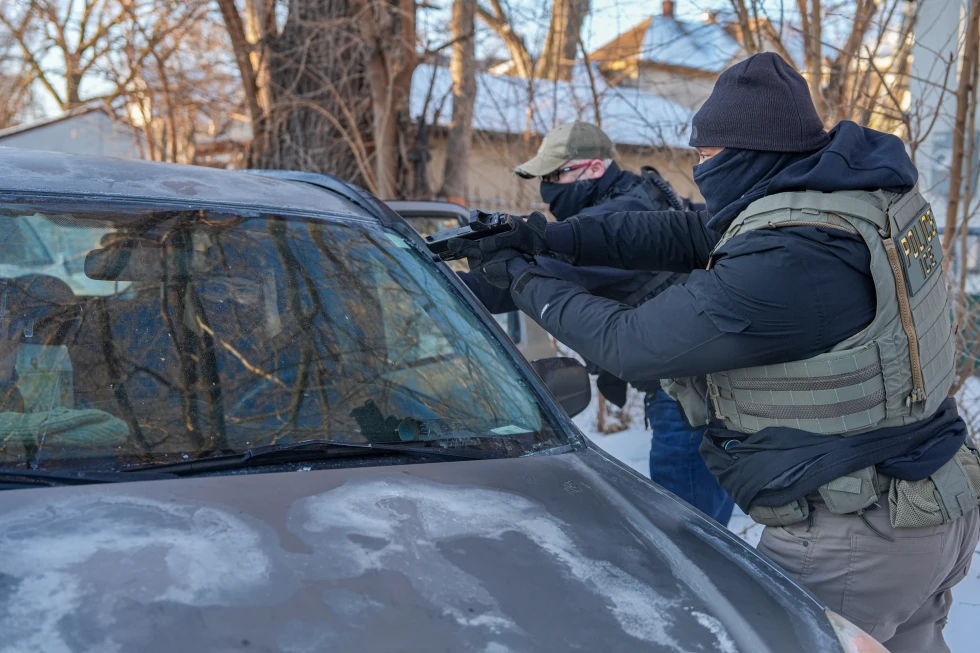
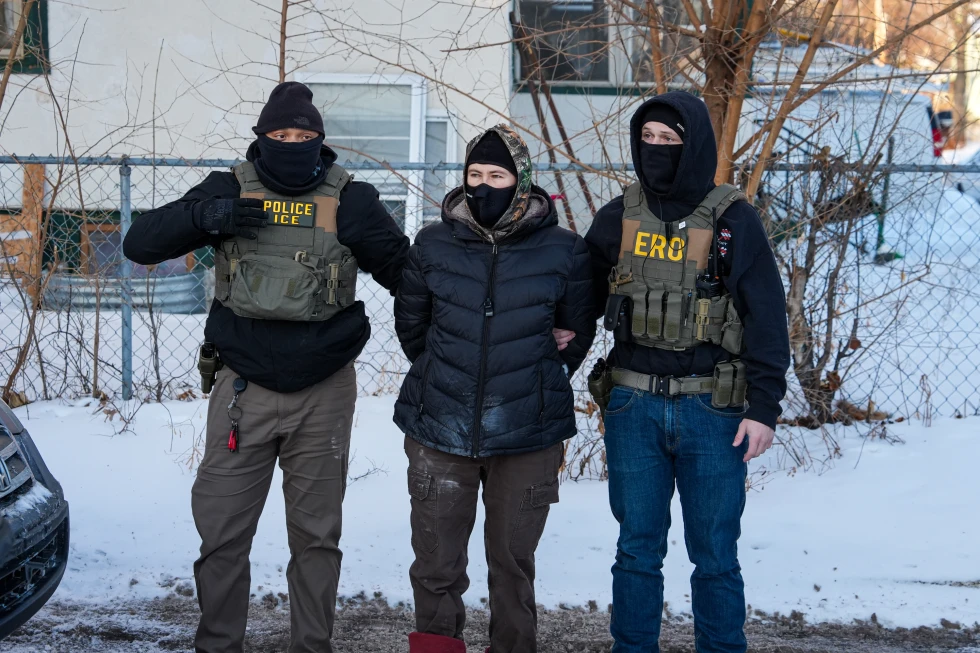
MINNEAPOLIS (AP) — Federal authorities have arrested Kyle Wagner, a 37-year-old Minneapolis resident, on charges related to cyberstalking and making threats to kill or assault Immigration and Customs Enforcement (ICE) officers amidst rising tensions over immigration enforcement in Minnesota.
According to federal prosecutors, Wagner, who allegedly claimed ties with anti-fascist groups, doxxed several law enforcement officials and urged his followers to engage in violence against those he referred to as gestapo and murderers. The charges arose in the context of heightened scrutiny of ICE activities following recent protests against immigration enforcement practices.
Wagner was charged by complaint, with federal authorities considering whether to seek an indictment for a trial that will provide further legal details of the case. As of now, no legal representation for Wagner is noted in court records, indicating the complex nature of navigating the legal and public discourse surrounding these issues.
The situation is underscored by recent comments from officials such as Attorney General Pam Bondi, who highlighted escalating threats against law enforcement involved in immigration enforcement. This reflects the broader political landscape marked by President Trump's earlier designation of antifa as a terrorist organization, complicating public perceptions and responses to federal actions against undocumented immigrants.
The complaint against Wagner alleges that he went further than just posting incendiary rhetoric on social media. He reportedly encouraged his followers to actively confront federal officers, actively promoting a confrontational approach to differing opinions on immigration policies. Wagner's statements also included explicit threats, suggesting preparations for violence against ICE.
Moreover, allegations surfaced concerning Wagner’s use of social media to dox a person identified as a pro-ICE individual by publicly revealing personal details including contact information, inciting further concerns about safety and civil rights in the context of heated immigration discussions.
Interestingly, the case has been filed in Michigan rather than Minnesota, raising questions about the choice of jurisdiction in prosecuting crimes connected to local events. This detail adds to the narrative of a strained legal system struggling to keep pace with rising immigration-related tensions.
The broader context features a backdrop of prosecutor resignations and frustrations within the U.S. Attorney's office for Minnesota as immigration cases proliferate, suggesting an overstressed legal infrastructure amid intensifying public debates on immigration policy enforcement.
As Wagner's situation continues to unfold, it serves as a pivotal example of the intersection between social media, anti-government sentiment, and immigration policy in the current political climate, highlighting the urgent need for dialogue and safety in the enforcement of federal laws concerning immigration.