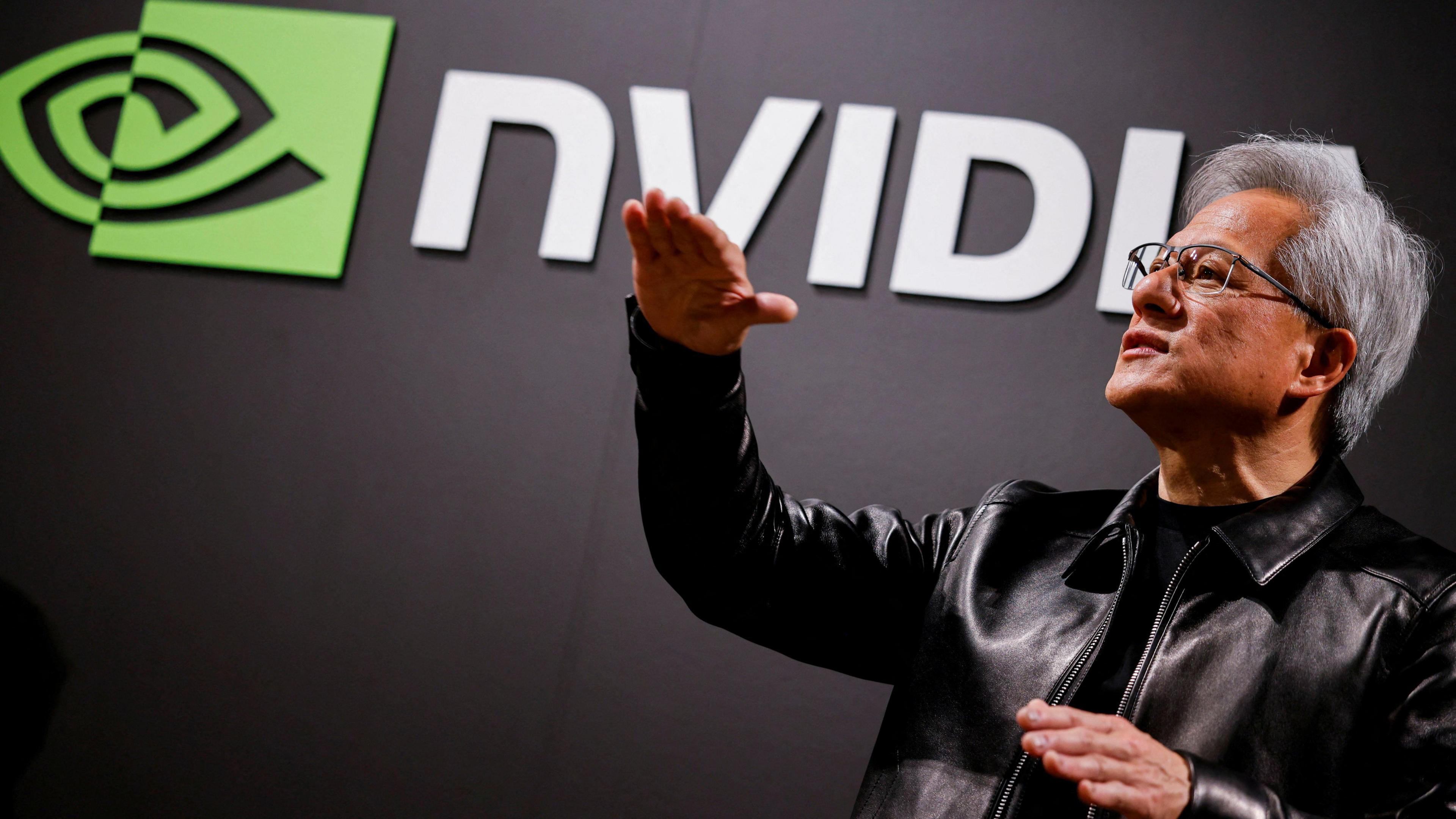
Nvidia has announced a landmark $500 billion funding round from some of Wall Street’s biggest investors – Apollo, BlackRock, Blackstone, Brookfield, Goldman Sachs and KKR – to fuel the growth of artificial intelligence (AI) infrastructure.
The partnership is notable because it treats AI hardware and the “compute” that powers it as a distinct asset class, a concept that has previously been under‑funded by traditional capital markets. According to CEO Jensen Huang, revenue in AI comes from compute and the combined loans, equity and structured finance are intended to underwrite the projects themselves rather than the users who will eventually purchase the AI services.
Spend from the fund will target several categories of infrastructure: new data‑centre construction to house, operate and cool thousands of Nvidia graphics processing units (GPUs), and the expansion of chip fabrication facilities that produce the next generation of AI chips.
This aligns with the broader industry trend of that many larger tech companies – Google, Meta, Amazon, Microsoft, SpaceX, Tesla, OpenAI and Anthropic – rely heavily on Nvidia GPUs to drive their AI services and chat‑bot platforms.
IBM’s statement that the industry has collectively spent more than $1 trillion on AI projects over the past three years demonstrates the urgent demand for larger compute capacity. The partnership therefore aims to respond to that demand while supporting Nvidia’s own future projects and those of its partners.
The funding arrangement also signals confidence from large institutional investors. Jim Zelter, president of Apollo, described modern compute as a “scarce, mission‑critical asset class,” and emphasized its potential to drive long‑term economic growth. BlackRock’s deal with Meta to finance a Texas data‑centre and Anthropic’s agreements with Macquarie and GIC highlight how disparate players are gaining access to this new capital pathway.
For Nvidia, the $500 billion bundle underscores the transition from purely chip manufacturing to becoming a central provider of AI infrastructure. Huang framed this next chapter as “helping to create a new class of productive, investable infrastructure: AI factories.”
The long‑term implications of this partnership span economies, technology ecosystems, and workforce skill needs as the race to deploy AI accelerators intensifies worldwide.