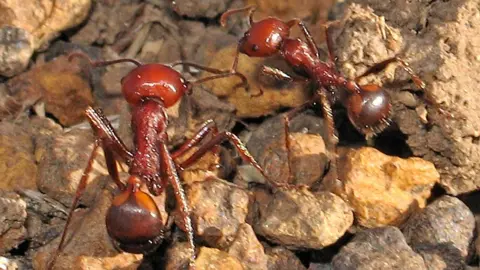
The ants are flying in Kenya at the moment, during the rainy season, when swarms can be spotted around Gilgil, a town that has emerged as the center of a booming illegal trade. The seasonal mating rituals of the giant African harvester ants make them particularly vulnerable to collectors, who seek prized queen ants to sell on the black market.
One can fetch up to £170 ($220) for a queen ant online, attracting international collectors fascinated by these insects for their distinctive behaviors and ability to form colonies.
The rise in popularity of ant keeping has led to a surprising illegitimate market, one that not only risks the survival of the species but also disrupts local ecosystems in Kenya.
Authorities recently discovered 5,000 giant harvester ant queens in a raid, revealing the scale of this burgeoning illicit trade. Such cases highlight the urgent need for regulatory oversight of the trafficking of wildlife in all forms, including less traditional species like ants.
Conservationists are raising alarms regarding the implications of this illegal wildlife trade. While it could represent a new economic opportunity for sustainable harvesting, unregulated practices threaten biodiversity and the environment. Proper measures and community involvement may be key in balancing conservation with commercialization.