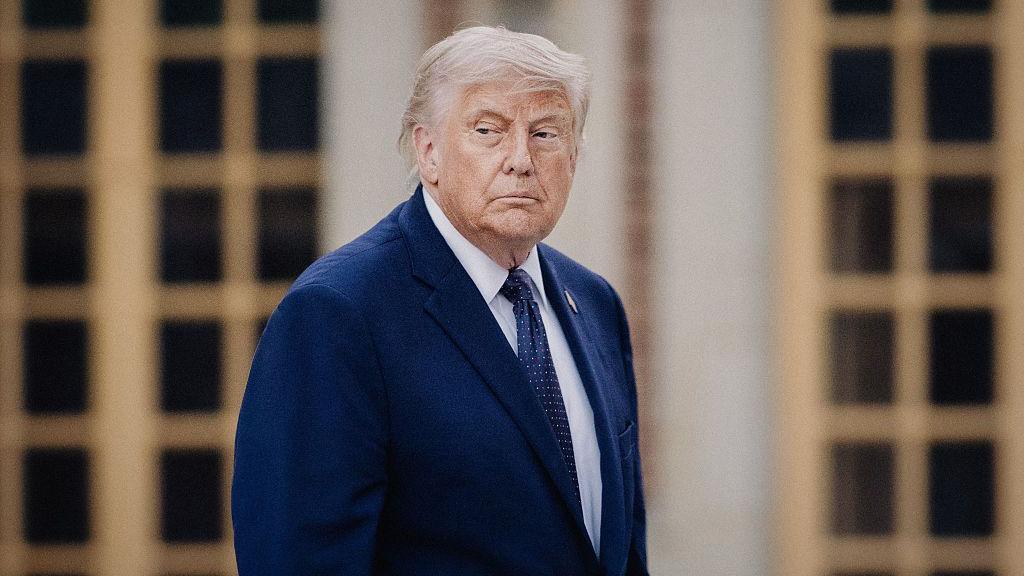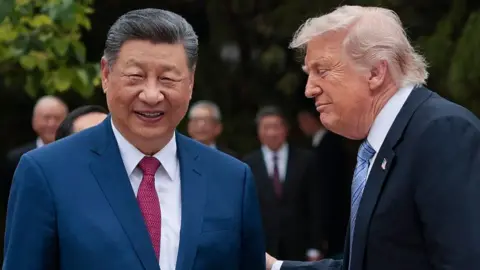
US President Donald Trump left Beijing after a two-day summit saying he had struck 'fantastic trade deals, great for both countries', but few details have emerged on what the two superpowers agreed.
Trump arrived for a high-stakes summit with Chinese leader Xi Jinping on Wednesday, accompanied by several CEOs: a high-profile business delegation spanning agriculture, aviation, electric vehicles and artificial intelligence (AI) chips.
Trade was near the top of the agenda despite recent tensions over the Iran war, and businesses hoped for key deals as well as an extension of the tariff truce that is due to expire in November.
The visit was defined by warm rhetoric and symbolism. Trump was wooed with a packed itinerary that included an honour guard, a state banquet, and an invitation to the exclusive compound where China's Communist Party leaders live and work.
The US president seemed impressed and invited Xi to the White House in September. He said talks had been 'very successful', while Xi called it a 'historic and landmark' visit.
China's Foreign Minister Wang Yi confirmed on Friday that Xi would visit the White House in the autumn. But neither side has announced trade breakthroughs or significant business deals.
President Trump, however, spoke to reporters aboard Air Force One and said China had agreed to buy 200 Boeing jets, with a potential commitment to buy an additional 750 planes. The aerospace giant confirmed the deal.
Trump also emphasized that American farmers would benefit from his trade deals because China would be buying 'billions of dollars' of soybeans. Nonetheless, there has been no confirmation of any deals or purchases from the Chinese.
If the Boeing orders are finalized, this would be the plane-maker's first major Chinese deal in nearly a decade, having largely been shut out of the world's second-largest aviation market due to trade tensions.
When asked about Trump's earlier comments on made deals, Chinese Foreign Ministry spokesperson Guo Jiakun only said that the 'essence of China-US economic and trade relations is mutual benefit and win-win co-operation'.
He added that both sides should work to implement the 'important consensus' reached by the two leaders and bring greater stability to bilateral trade ties and the global economy.
Despite expectations, the issue of tariffs was notably absent from discussions as Trump stated they did not engage on that topic at all. However, the White House announced that both leaders agreed to establish a 'Board of Trade' to manage the relationship without reopening tariff negotiations.
Future discussions are anticipated as both Trump and Xi seek to maintain momentum towards resolving lingering trade disputes between their countries.
The summit also involved discussions about Taiwan, where Xi underscored that 'the Taiwan question is the most important issue in China-US relations'. Taipei will watch closely how this impacts US collaboration with semiconductor companies on the island.
Overall, while the summit held significant diplomatic value, the lack of concrete economic commitments leaves major questions for stakeholders in both nations.