Long Island Judge Hands Gilgo Beach Serial Killer Nine Life Sentences
Rex Heuermann, the man who terrorised Long Island’s remote beaches between 1993 and 2010, was sentenced Wednesday to three life terms for first‑degree murder and four additional life sentences for second‑degree murder, all to run consecutively. The judge, Timothy Mazzei, delivered the maximum penalty after the evidence, the confession and the testimonies of victims’ families demanded it.
Heuermann had been previously charged with seven murders; in April, prosecutors added a fourth, a killing from 1996, to the count. His admission of guilt followed a path that took more than a decade, because the remains of the victims were only discovered in 2010 when four bodies were found near each other on Gilgo Beach. Police only linked his DNA to the case in 2023, after a tip about a pizza box and an “ogre‑like” man drove a first‑generation Chevrolet Avalanche.
Victims’ families cried out in court. Amanda Barthelemy, sister of the missing Melissa, recounted how Heuermann called her family and bragged about letting her sister’s body “rot.” She told the judge that she had been fifteen when she last saw her sister, and that the call she received after the murder was “a nightmare.” The courtroom erupted in a slow‑moving, audible wave of cheers when the judge declared the sentences.
Family grief and the social stigma of sex work were a prominent theme. Several of the victims were believed to be sex workers, accessed through Craigslist calls. Nicolette Brainard‑Barnes, daughter of Maureen, lamented how society labeled her mother, and stressed that her mother “was an entire human being.” Liliana Waterman, the four‑year‑old daughter of Megan Waterman, remembered learning about “prostitutes” and “pimps” through a frightened internet search.
Police and investigative shortcomings were raised. Law‑enforcement facts: The Suffolk County Police missed federal involvement until a 2022 task force, which combined local and federal agencies and led to Heuermann’s capture in six weeks. Earlier leaders faced accusations of obstruction and of failing to aggressively pursue the crimes because of the victims’ professions. Residents on Long Island reflected on how the delayed justice had “crippled an entire community.”
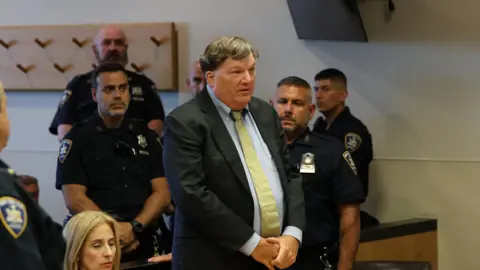
Heuermann’s confession and remorse were minimal. At the sentencing, he admitted responsibility, answered “yes” when asked if he was sorry, but added that his words now “had no meaning.” He looked from the judge’s podium to no one directly, his gaze turning away as soon as he spoke. The judge responded with a sweeping condemnation: “You are a disgusting, despicable, small man… get him out of here.”
Looking forward… The sentencing allows the families to begin healing and move toward “wonderful lives,” said Suffolk County District Attorney Ray Tierney. The community is urged to take comfort that the killer has been removed from public life and that the children of victims can piece together ways to cope with trauma and loss. The case remains a grim reminder of the need to ensure that victims of any background – especially marginalized groups – receive the same level of investigative attention and justice.