The Complex Ties Between China and Russia: Understanding Their Alliance
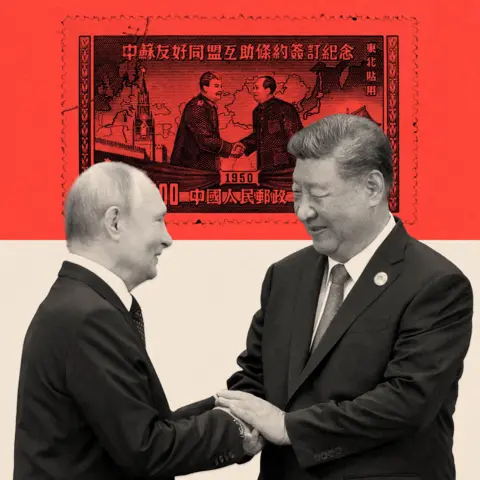
As they strolled through Tiananmen Square in September, Chinese President Xi Jinping and Russian President Vladimir Putin engaged in a conversation that reflected both whimsy and the rarely seen depth of their relationship. Amid discussions of life expectancy through medical advances, their interaction highlighted a broader narrative—one of a partnership that is increasingly strategic and significant in the international landscape.
Despite their apparent camaraderie, the relationship between China and Russia is layered with complexities, revealing a partnership that is often portrayed variably as either a rigid alliance or a flexible friendship.
According to analysts, the dynamics of their relationship are skewed heavily in China’s favor. China is Russia's largest trading partner, and in contrast, Russia accounts for a mere four percent of China's international trade. China’s technological dominance, especially in the wake of Western sanctions on Russia, has allowed it to become integral to sectors across the Russian economy.
Recent reports illustrate that over 90% of the technology Russia acquires under sanctions comes from China, a statistic that underscores Moscow’s growing dependence on Beijing.
However, the Kremlin expresses reservations regarding its status. As Russian officials stress their desire to maintain an equal footing with China, it becomes evident that despite the asymmetrical partnership, Moscow seeks to assert its sovereignty.
This mutual dependency is further complicated by regional security dynamics, as Russia's ongoing conflicts, specifically its invasion of Ukraine, shift the balance of power and resource allocation. Beijing appears cautious not to push Moscow too hard, recognizing Russia's pride and the critical role it plays as a counterbalance to U.S. influence.
China and Russia also share common geopolitical goals, aiming to reshape an international order that counters perceived Western dominance. Their partnership is defined by a mutual understanding, where they often overlook human rights discrepancies and present a united front on the global stage.
Yet, despite their close ties, the relationship is not without pitfalls. Analysts suggest that while Putin and Xi portray an image of unwavering friendship, their cooperation allows for a great deal of strategic freedom, enabling each nation to act independently based on national interests.
As President Putin prepares to commemorate the 25th anniversary of the Treaty of Good-Neighbourliness and Friendly Cooperation in Beijing, the question remains: will the China-Russia relationship endure the test of shifting global dynamics and internal pressures?
Ultimately, while the ongoing partnership presents various challenges and imbalances, the binding threads of trade, military cooperation, and mutual respect for sovereignty suggest that their collaboration will persist for the foreseeable future.