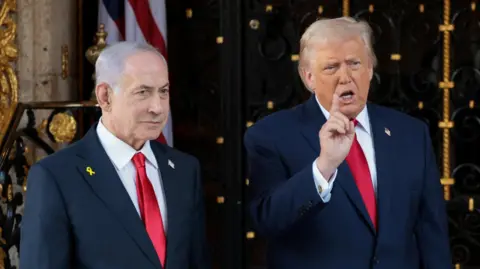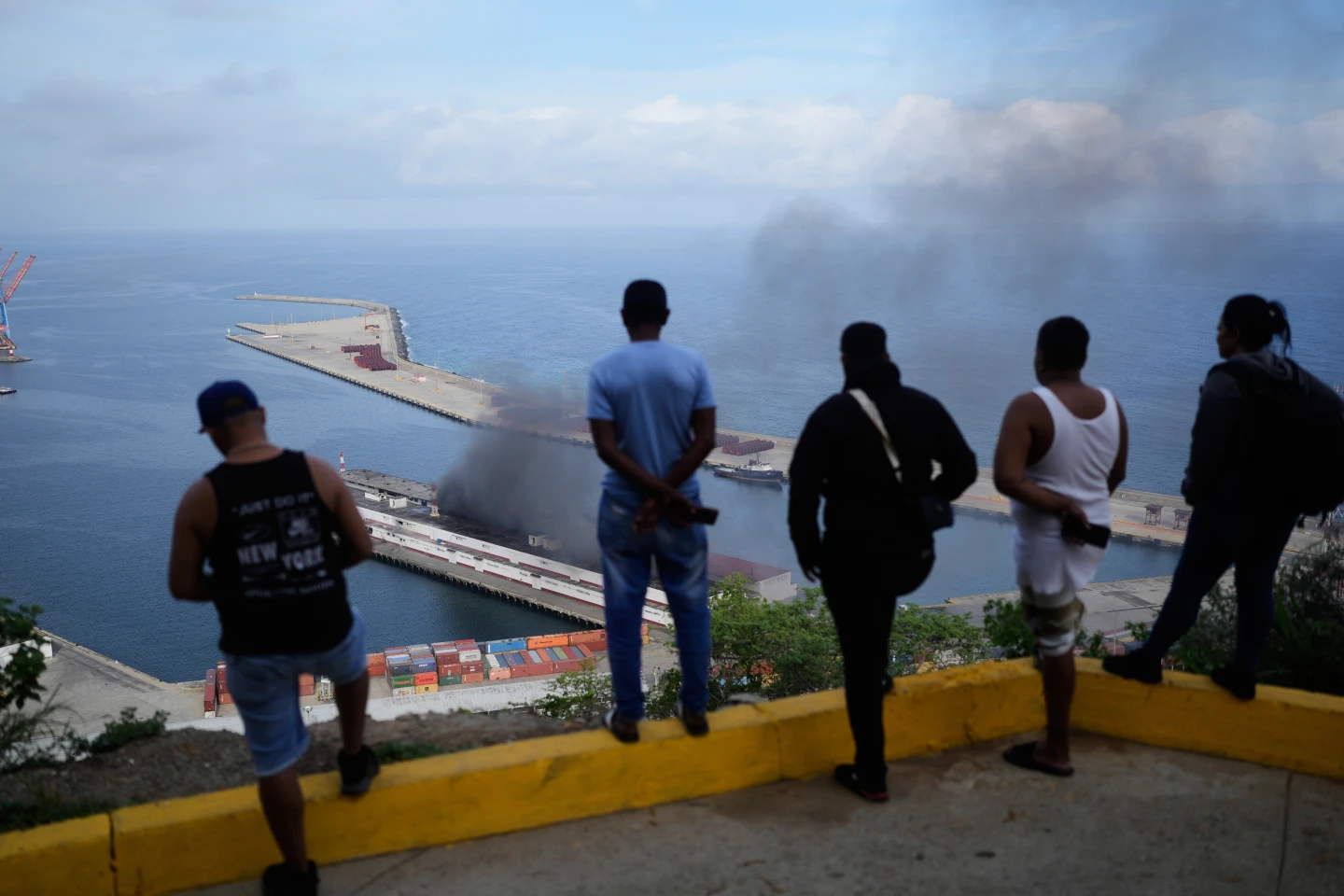
In a striking military operation, President Donald Trump announced on January 3, 2026, that the United States has captured Venezuelan President Nicolás Maduro, following a monthslong pressure campaign directed towards the Venezuelan leader's government. Trump stated that the U.S. would temporally administer the country and utilize its vast oil reserves to benefit international markets.
The abrupt military actions, likened by some to a coup, culminated in Maduro being removed from a military base and brought aboard a U.S. warship. Venezuelan officials, including Vice President Delcy Rodríguez, responded vehemently against U.S. interference, labeling the situation an attack on the nation's sovereignty.
President Trump characterized the military operation as a decisive and necessary step designed to protect American lives from narcotics trafficking allegedly orchestrated by Maduro's government. “We will restore a safe and orderly transition in Venezuela," Trump stated during a press conference, just hours after speaking to reporters about the unfolding incident.
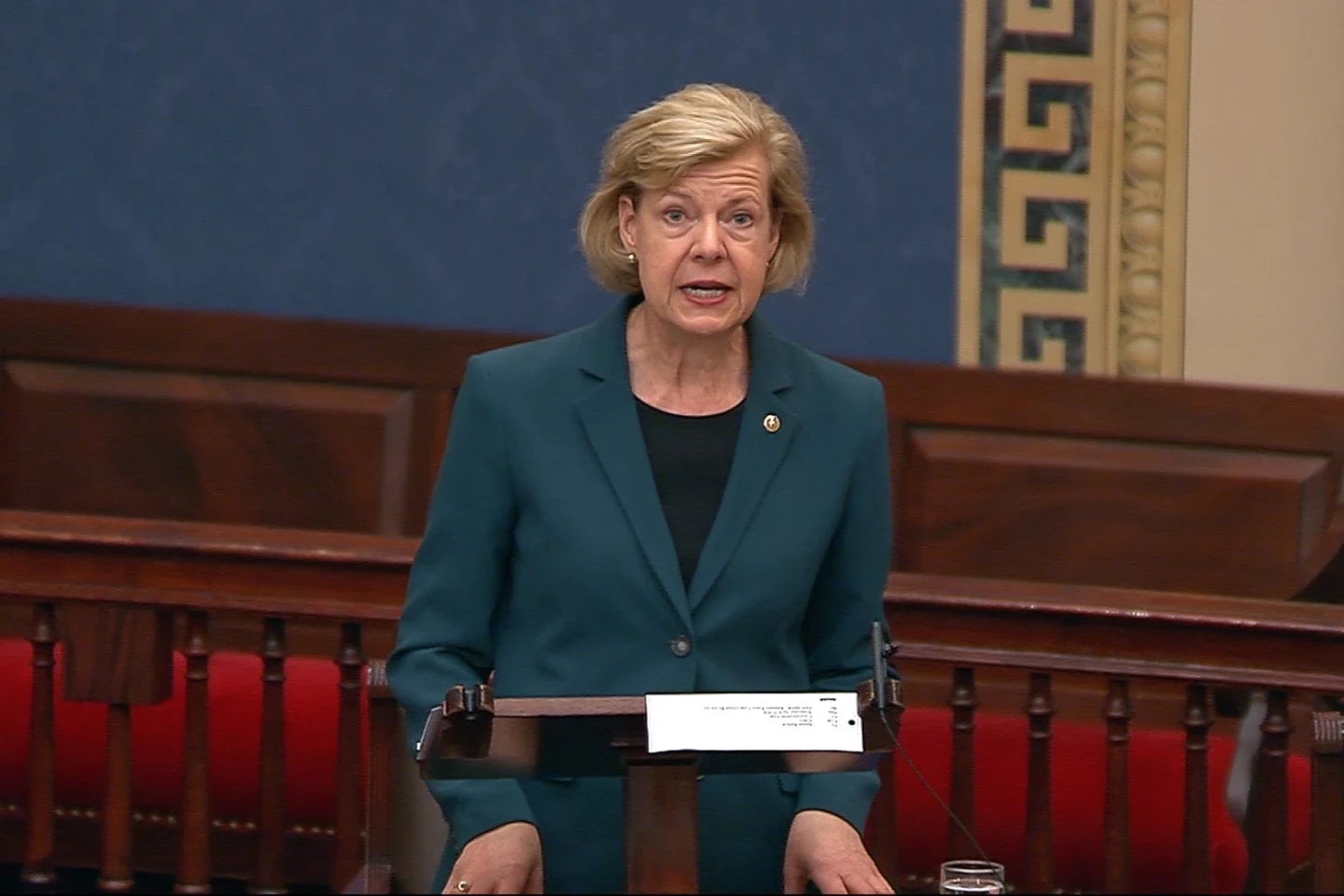
The legality of the operation has come into question, as U.S. Congress did not receive prior notice of the military engagement until it was already happening, leading to bipartisan concerns regarding the administration's authority to act in this way. Some congressional leaders have voiced support for the action, while others have demanded clarity on the legal justification behind the military intervention.
Meanwhile, at home and abroad, reactions have been mixed. Thousands of Venezuelans celebrated Maduro’s ousting in the streets of South Florida, while protests erupted in Caracas in support of the captured leader, demonstrating the deep divisions within Venezuelan society.
The global community watches closely as the unfolding events continue to shape the political landscape of Venezuela. As Trump claimed U.S. control of Venezuelan oil resources, international reactions are swift, highlighting the contentious nature of U.S. foreign interventions.