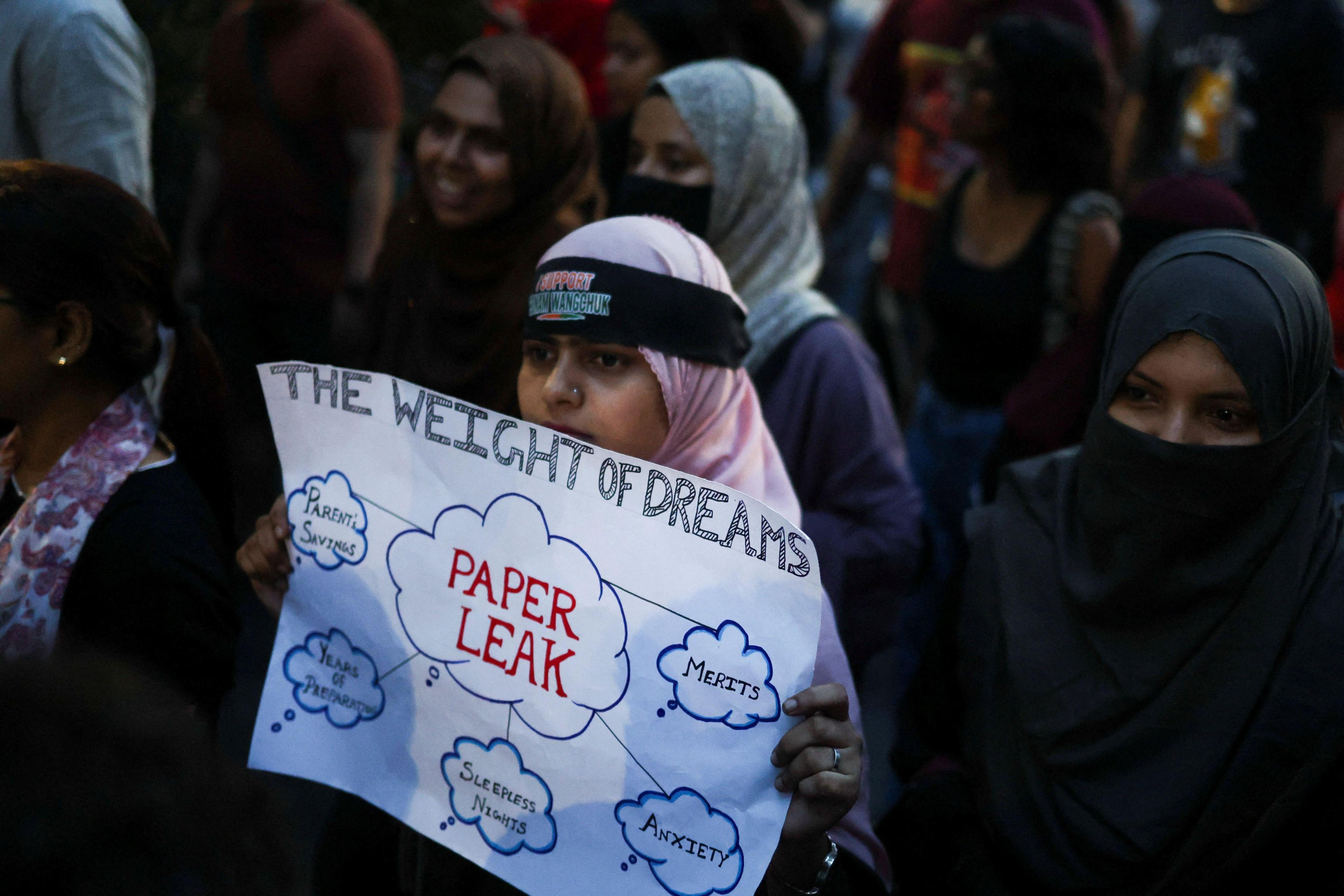
India’s national medical entrance exam, the National Eligibility cum Entrance Test (NEET), has become a flashpoint for protests, with thousands demanding the resignation of Education Minister Dharmendra Pradhan over repeated paper‑leak scandals. The issue resurfaced after 2024’s leak – when trunks containing printed papers were broken into during transport – and again in 2026, when investigators blamed teachers for leaking the paper before it left the National Testing Agency’s (NTA) hand.
In response, Prime Minister Narendra Modi announced a task force headed by Infosys founder Nandan Nilekani, tasked with overhauling the NTA and switching to computer‑based testing (CBT). A Supreme Court petition accepted the government’s reforms but cautioned that CBT would not end the problem of leaks.
Professor V Kamakoti, IIT Madras and task‑force member, said the leakage problem stems from a lack of trust in the people who set questions and oversee candidates. He argues that, while CCTV and AI monitoring can flag suspicious interactions, the real vulnerability lies with the origin: the question‑setting process itself. Without reliable, vetted setter teams, even the most secure systems can be compromised.
Proponents of CBT point to its robustness: air‑gapped networks, redundancy in case of system failures, and the elimination of printed question paper. Yet Dr Debananda Misra, IIT Delhi, warns that technology can never fully eliminate incentives for fraud. He stresses that the competitiveness of NEET – with only a few seats in public medical colleges but millions of candidates – creates a powerful motive for cheating.
Moreover, Misra highlights the risk of technical glitches that can affect candidates’ concentration, as well as the digital divide that may favor students from coachings in better-equipped facilities. He recommends multiple equivalent papers, localised versions, and periodic audits to reduce the impact of a single breach.
The government’s 2024 review benchmarked 57 % of its 100‑plus recommendations, but paper leaks continue. With the next cycle of entrance exams beginning in December, there is intense pressure to implement reforms quickly. Success will ultimately hinge on whether students and families can trust that the system is fair, not merely on the format of the exam.