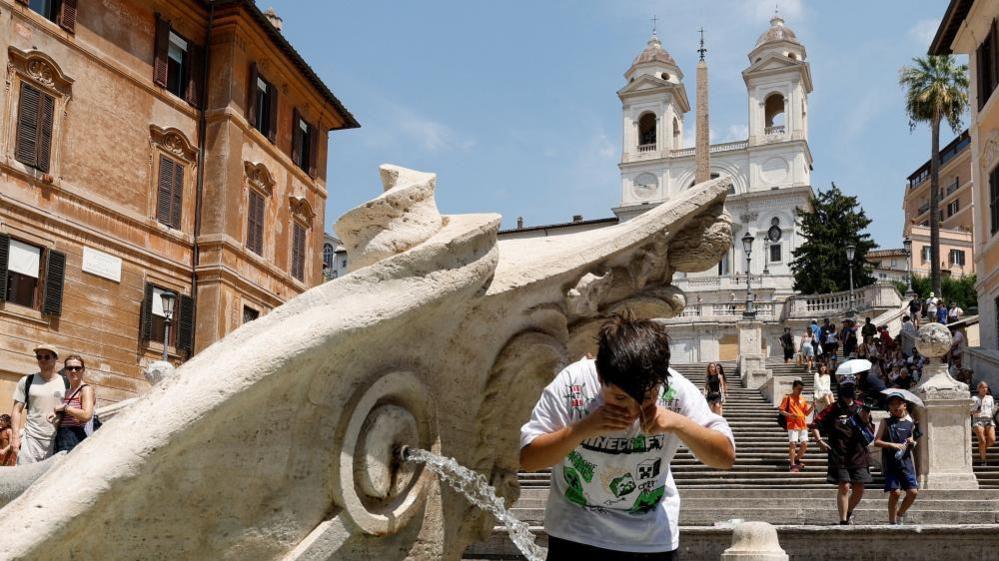
Italy’s central and northern regions are experiencing record‑high temperatures that have prompted the Ministry of Health to issue a red alert for all 27 major cities, including Milan, Naples, Venice and Rome, on 4 August 2026.
The heatwave has led to a range of safety measures for visitors. The Colosseum, Pantheon and Sforza Castle now welcome crowds after sunset – with the Colosseum open Friday and Saturday from 19:45 to 23:30, the Pantheon from 19:00 to 23:00 every day except Thursdays, and the Sforza Castle from 17:30 to 19:30.
Inside these sites, cooling mists, additional medical stations and the promise of more shaded vegetation are helping to protect tourists from heat exhaustion.
Experts advise touring the country early in the morning or later in the evening. “Visiting during the hottest hours is a big mistake,” says Simone Quilici, director of the Archaeological Park of the Colosseum. “We encourage people to use the extra evening opening times to keep the crowd in cooler parts of the day.”
Air‑conditioned museums rank high as the safest places to escape the sun. Visitors are also encouraged to visit churches – many of which offer shaded interiors – and to explore local restaurants and supermarkets for quick, affordable shelter. Tourism specialist Mateo Medina notes that “24:00 tours” and 08:00 morning tours are now popular in Rome because they avoid peak heat.
For those wanting a more active experience, travel blogger Alessia Armenise recommends being near a natural water feature – boat tours, beach visits or even rowing on inland waterways – as an efficient way to stay cool. She also urges tourists to book tickets for high‑traffic attractions in advance to avoid long queues.
Local knowledge can also help. In Naples, a tour guide warns that open archaeological sites should be tackled early, while suggesting a visit to the National Archaeological Museum – a fully climate‑controlled interior. In Florence, the nearby hills of Garfagnana offer a cooler escape for those driving through.
Finally, the advice is that “good common sense” – staying hydrated, wearing hats, applying sunscreen and planning activities around cooler times – remains the best defense against heat stress during Italy’s 2026 summer.