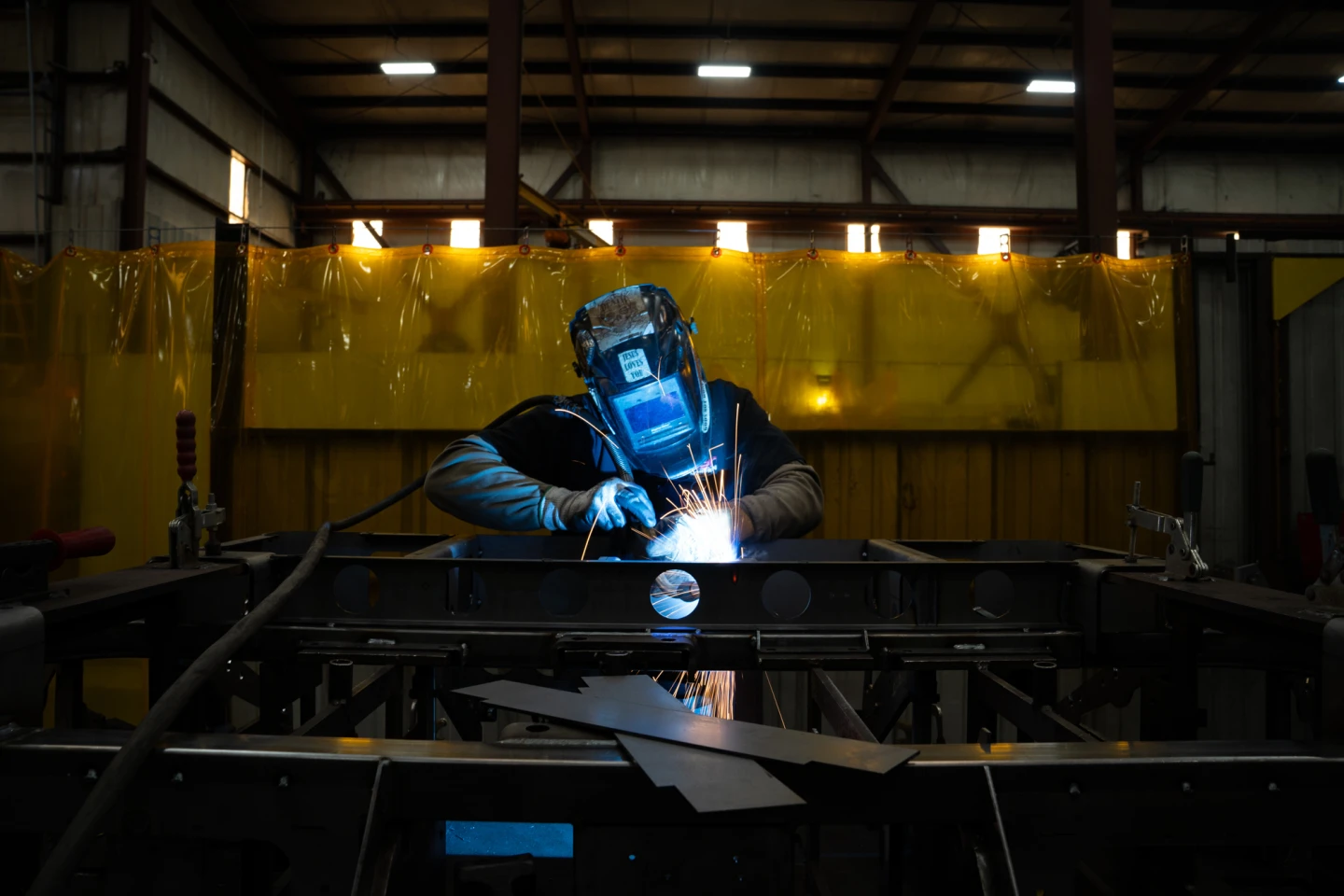
WASHINGTON (AP) — Jay Allen, a supporter of President Donald Trump, believed the Trump administration's promises of tax cuts and reduced regulations would bolster his manufacturing business in Arkansas. However, tariffs central to Trump’s economic agenda have severely affected Allen Engineering Corp., driving up costs for essential foreign-made components and squeezing profits.
Allen’s experience reflects a broader trend among U.S. manufacturers struggling with rising costs due to tariffs intended to protect American jobs. Despite their initial goal to foster US manufacturing, these tariffs have led to increased prices on products like power trowels, which sell for as much as $100,000.
In 2025, Allen ran his company at a loss, reducing his workforce from 205 to 140 employees while increasing prices by 8-10% in an attempt to stay afloat. What’s really sad is the unintended consequences of his tariffs are hurting manufacturing in our country,” Allen stated, highlighting the pressure on working-class employees.
As manufacturing jobs have declined, reports show that approximately 98,000 positions were lost during Trump's first year back in office. The latest statistics reveal that U.S. companies are now suing the administration for over $130 billion in tariff refunds, raising questions about the effectiveness of Trump's approach.
Officials maintain that while construction spending is high, mainly due to programs initiated under President Biden, the anticipated manufacturing revival remains elusive. The construction boom, especially in factory settings, is largely attributed to Biden's CHIPS and Science Act, which supports new investments in semiconductor plants.
As uncertainty grows around Trump’s tariff policies—fueled by over 50 actions and the potential for additional tariffs—companies remain hesitant to invest in new production facilities, fearing unstable long-term conditions. Reports indicate that the delay in reviving U.S. manufacturing reflects a troubling trend, where the expected renaissance may take much longer than anticipated.
Ultimately, while proponents advocate for the benefits of tariffs in restoring profitability to U.S. steel mills, companies dependent on this steel express significant concerns over rising costs. For many manufacturing businesses, ongoing tariffs present challenges that could undermine their competitiveness, notably against foreign manufacturers, such as China, whose trade surplus has escalated.