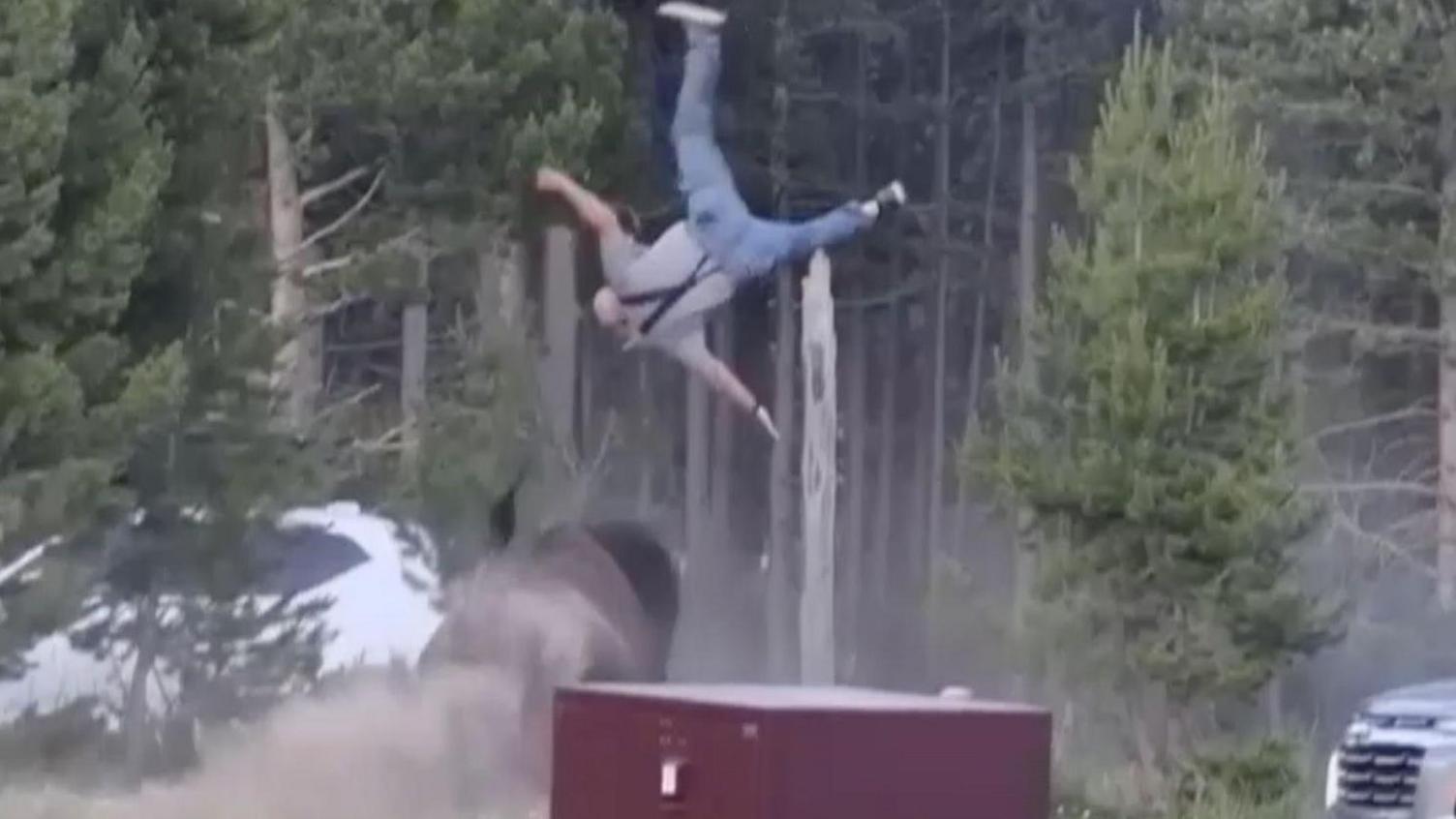
A 2,000‑lb bull bison coughed into the path of 65‑year‑old Carl Isom‑McDaniel, flinging the man several metres into the air and leaving him with multiple injuries.
The incident, captured by a by‑stander on a solitary day in July, spurred outrage across social media and media outlets. The video shows the pair, an elderly man and a young boy, pausing to photograph the animal before it leapt to its feet and chased them. A truck that approached was quickly driven away by the charging bison, leaving a dust cloud in its wake.
By the time First‑Responders arrived, Isom‑McDaniel had been transported to a nearby hospital. The New York Times was quick to report the injury estimate, while the National Park Service (NPS) has, so far, refrained from a detailed public statement. The BBC’s inquiry to the NPS about the incident highlights the zero‑hour policy for visitor‑animal encounters.
Bison, though often considered tranquil, are the primary cause of human injury in Yellowstone, per the NPS website. They can run three times faster than humans‐making safe distances essential. The NPS recommends visitors keep at least 25 yards (23 m) from bulls, and forbids approaching a bison to take photos.
For background, the incident took place at Bridge Bay Campground on Yellowstone Lake during the final hour before sunset. Isom‑McDaniel and his grandson were identified by the New York Common last evening. In the footage, he is shown in some pain, yet still appears conscious and upbeat after the blow‑over.
Summer is the busiest season in Yellowstone, with almost 60 % of visitors arriving between June and August. July’s overlap with the bulls’ mating season renders them more testosterone‑driven and unpredictable. J. Barfield, a conservation biologist at Colorado State University’s Laramie Foothills herd, notes that even research teams keep a safe distance during this time, except when observing from vehicles safely behind a barrier.
Local and national commentary has highlighted a possible need for more visible signage or stronger enforcement of the 25‑yard rule. Conservation groups, meanwhile, argue that public education on safe behaviour around large animals is critical, while park officials emphasize visitor responsibility, reminding hikers that “the animal’s space is a private property that should not be trespassed.”
The incident invites a reassessment of how the park educates visitors on risk, particularly during high‑traffic seasons that coincide with aggressive animal behaviours. It demonstrates how one moment can bridge wilderness fascination, wildlife responsibility, and the limits of visitor experience in a valued national park.